 Shopping from Canada?
  Go to Defender Canada!



Guide to Boat & Yacht Hull Prep Before Launch
Spring launch is the perfect time to deal with the hull issues that can quietly grow into bigger problems on the water. Tackling blisters, flaking paint, and marine growth before you launch helps prevent lost speed, higher fuel use, and expensive mid-season repairs.
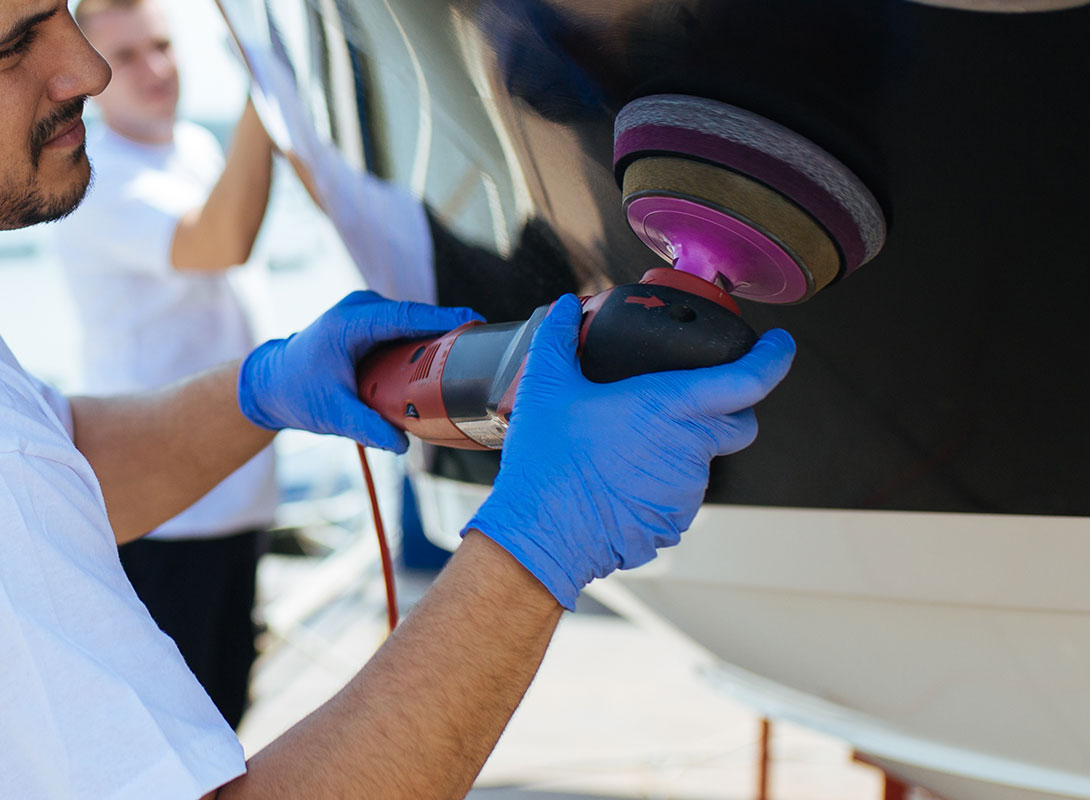
With the right prep, most boaters can handle hull maintenance themselves without relying on the yard. By inspecting, cleaning, repairing, and protecting the surface properly, you’ll set your boat up for a smooth launch and a trouble-free season.
Why Hull Prep Matters Before Launch
Hull prep before launch isn’t about making the boat look pretty on the hard . Rather, it’s about keeping the hull fast, efficient, and protected once it’s back in the water. A dirty or rough bottom creates drag,costing speed, burning fuel, and neglecting metal parts at the cost of corrosion.
On fiberglass boats, small blisters and cracks can turn into bigger problems when water pressure and temperature swings get involved, and the risk of osmosis only goes up if the surface is compromised. And by getting the cleaning, antifouling, and zinc anodes handled ahead of time in the spring, your boat launches safer, runs better, and stays that way longer.
Step 1: Inspect the Hull
A good inspection upfront keeps small problems from turning into expensive ones when the boat is back in the water. The goal is to spot damage, weak adhesion, and corrosion early enough to fix it properly before any sanding, priming, or paint starts.
Check for Damage and Wear
Start with a slow walkaround and look for the obvious troublemakers — such as cracks, blisters, oxidation, chips, and any fittings that look loose or poorly sealed. Anything suspicious gets marked promptly and clearly so you don’t lose track of it once sanding dust and prep work start.
If a spot looks like a bad repair or a soft area, use a moisture meter or a simple tap test to sniff out delamination before it becomes a bigger mess. When issues do show up, make sure you pull together all the right materials ahead of time, including epoxy repair kits and fiberglass supplies, so repairs happen cleanly and on schedule.
Inspect Running Gear and Thru-Hulls
Start under the boat where failure gets expensive fast: shafts, props, struts, and anodes all need a hard look for dings, pitting, looseness, or heavy corrosion. If an anode is chewed down, cracked, or hanging on by a prayer, replace it now and use the Anodes Guide to make sure the material and placement actually match your setup.
Next, move to every place water goes in or out of the hull, because a clogged intake or sketchy fitting can quickly ruin a launch day. Clean the strainers, clear the intakes, and treat any suspect thru-hull fittings like a real problem and not a “maybe later;” and make sure to keep propeller maintenance gear on hand so running-gear fixes don’t stall the whole job.
Step 2: Clean & Decontaminate the Hull
Hull cleaning may not be the most exciting part of spring prep, but it’s one of the most important. Dirt, salt residue, and old wax can hide damage and prevent coatings or repairs from bonding properly.
Taking the time to thoroughly wash and decontaminate the hull ensures that sanding, repairs, and new coatings adhere the way they should. A properly cleaned surface sets the foundation for a finish that lasts through the entire boating season.
Wash Off Winter Grime
Start with a proper wash using marine-safe detergent to strip off salt, grime, and that dead layer of scum that hides cracks and makes every next step harder. If the waterline has algae or a stubborn scum line, step up to a dedicated hull cleaner, but keep acid products away from aluminum and other sensitive metals unless the label explicitly says it is safe. And use the right wash brushes and poles so the work goes faster and you are not grinding dirt into the surface.
Remove Old Wax or Oxidation
Wax and oxidation have to come off before anything new will stick, so never skip this step and hope the paint or sealant “figures it out.” Use a hull polish remover or a light compound to cut the chalky layer and strip tired wax, then buff evenly so you restore gloss without burning through gelcoat on edges and corners. And a decent set of polishers and buffers makes this job cleaner, faster, and a lot more consistent.
Step 3: Repair & Restore Surface Damage
Surface repairs are where you prevent small issues from becoming bigger problems later in the season. Scratches, blisters, chips, and gouges should be addressed now, before paint or polish goes on.
Coatings and wax can improve appearance, but they won’t fix underlying damage. Taking the time to repair and fair the hull properly ensures better adhesion, a cleaner finish, and protection that lasts all season.
Fiberglass Repairs
Blisters, chips, and gouges are basically open invitations for water to get where it should not, so patch them properly instead of settling with “good enough for now.” That means grinding or sanding to clean material, filling and fairing in thin, controlled passes, and shaping the surface back to smooth so you are not painting over a speed bump. Then give the repair the full cure time before primer or paint goes anywhere near it, and stock up on fiberglass repair supplies so the job does not stall halfway through.
Metal & Aluminum Hulls
With metal, the enemy is corrosion, and it loves to hide in plain sight, so look closely for pitting, white crust, bubbling paint, or that ugly powdery bloom around fittings. If galvanic corrosion is starting, deal with the cause as well as the symptoms, which means checking anodes and replacing any that are wasted or wrong for the water you run in. And once the surface is properly cleaned and prepped, get the right primer down before antifouling, and keep anodes and metal primer kits on hand so you know you’ve got the right gear for the job.
Step 4: Sand, Prime & Paint
Proper surface preparation is what determines how well bottom paint performs once your boat is back in the water. Sanding and priming create the clean, stable surface coatings need to bond correctly and protect the hull.Guide to Boat Bottom Paint for Boats | Defender Marine
Taking the time to prep carefully helps antifouling paint go on smoothly and stay in place throughout the season. When done right, you’ll end up with a hull that stays cleaner, performs better, and requires less maintenance between haul-outs.
Surface Preparation
Bottom paint won’t adhere to your hull by magic, so give it something to bite into by sanding the existing paint lightly for adhesion instead of trying to “coat over” a glossy surface. From there, keep the momentum going by vacuuming or brushing off dust and then wiping down with a solvent cleaner, because leftover sanding powder is basically built-in failure.
Applying Bottom Paint
Once the surface is clean and keyed, the next call is picking the right antifouling, because hard and ablative paints behave differently and the wrong choice can make maintenance a pain all season. After that decision is made, commit to coverage by laying down at least two coats, paying extra attention to leading edges and high-wear zones where paint disappears first.
Keep the right ablative paint, thinners, and roller kits on hand so the application stays consistent, because making do with the wrong roller or the wrong thinner is how a clean job turns into streaks, thin spots, and lousy adhesion.
Step 5: Polish & Protect
Polishing and protecting the hull does more than improve appearance. A quality polish or wax shields the gelcoat from UV exposure, salt, and oxidation that can quickly dull an unprotected finish.
Applying the right protective coating helps the hull maintain its shine and makes routine cleaning easier throughout the season. With proper protection in place, your boat will stay looking better and require less effort to maintain between trips.
Wax & Seal
Once the hull is clean and de-waxed, lock it down above the waterline with a UV-protectant wax or a polymer sealant, because bare gelcoat is basically begging to oxidize. From there, buff it out evenly to a clean shine, since a smoother surface sheds grime better and keeps you from fighting the boat every time you wash it. Keep the right boat wax and sealants on hand so you are not mixing random products that don’t play well together.
Inspect and Reinstall Hardware
With the surface protected, circle back to the thru-hulls, drains, transducers, anodes, and other hardware and make sure everything is seated, sealed, and secure. Then take the extra few minutes to lubricate seacocks and fittings, because stiff hardware is never “fine” when you need it to move quickly. Finish by rechecking anything you touched, since one loose clamp or half-seated fitting can undo a lot of good work the moment the boat hits the water.
Step 6: Final Launch Readiness Checklist
This is the last pass before the boat goes from “looks ready” to actually ready, and it’s where rushed launch days love to create dumb problems. Run the list, take the extra 15 minutes, and avoid the kind of mistake that ruins the first weekend.
- Drain plugs: Confirm every drain plug is installed, seated, and snug before the boat moves toward the water.
- Bilge pumps: Test automatic and manual operation, check float switches, and make sure discharge lines are clear; stock up on bilge pumps parts if anything is tired.
- Steering and controls: Turn lock-to-lock and verify smooth movement with no binding, slack, or weird noises before you’re dodging traffic at the ramp.
- Trim tabs and running gear basics: Cycle trim tabs and do a quick visual check that nothing is loose, cracked, or obviously unhappy.
- Paint cure time: Verify the bottom paint has fully cured per the label, because splashing early can wreck adhesion and waste your work.
- Safety and corrosion: Confirm your required safety gear is onboard and up to date, then double-check zincs & anodes are installed and secure so corrosion protection starts on day one.
Regional Boat Hull Tips
Launch prep is never one-size-fits-all, because water temperature, growth rates, and corrosion risk change the rules depending on where the boat lives. Use these as the reality checks that keep you from doing a “perfect” job that’s perfect for the wrong region.
Northeast & Great Lakes
Winter storage is hard on finishes, so start by taking oxidation seriously and do not pretend a chalky hull will “buff out later.” Cold-weather cycles also love to reveal blisters and tired repairs, which is why a slow inspection and a tap test on anything questionable pays off here. If something looks marginal on the hard, fix it now, because short seasons are too expensive to spend bobbing at the dock waiting on a repair slot.
Florida & Gulf Coast
In Florida and the Gulf Coast, growth is not just a possibility, it’s inevitable, so the bottom paint choice and coverage matter more than the few bucks you’re saving with the wrong paint. Because warm, salty water keeps corrosion busy year-round, stay on top of anodes and keep an eye on pitting around fittings and running gear. If the hull is clean, the paint is right, and the anodes are fresh, the boat runs faster and you spend less time scraping biology off your investment.
Pacific Northwest
Moisture is a constant battle in the PNW, so focus on keeping surfaces dry during prep and don’t trap water under coatings by rushing cure times. Mildew is also relentless, which means cleaning and ventilation matter even when the boat is out of the water and it “doesn’t feel that bad.” When it comes to antifouling, lean into local, eco-friendlier options that match regional rules and still do the job, because the wrong paint can turn into a waste of money and a compliance headache.
Boat Hull Prep FAQs
Hard paint cures to a tougher film that wears by erosion and scrubbing, while ablative paint is designed to slowly wear away and “self-renew,” which can mean less buildup but a different maintenance rhythm.
Repaint when performance drops, paint is thin in high-wear spots, or growth starts sticking faster, but most boats land somewhere between every season and every few seasons depending on water type, use, and paint choice.
Yes, if the blisters are localized and you do the unsexy parts right, meaning grind to clean glass, dry thoroughly, fill/fair properly, and let everything cure fully before coatings go back on.
Start mild and step up, but most oxidation comes off with a proper compound or oxidation remover followed by polish, and the “best” choice depends on how chalky the gelcoat is and how much cutting you can safely do.
Follow the paint label, because cure and launch windows vary by product and conditions, and splashing too early is a great way to ruin adhesion and waste a weekend of work.