 Shopping from Canada?
  Go to Defender Canada!


How to Choose Dock Lines for Your Home Slip or Marina
Dock lines are one of those things boaters tend to figure out right after a bad afternoon at the slip. A boat that surges, yaws, and grinds on the dock will expose a lazy line setup in a hurry.
| Line Type | What It Controls | How It’s Positioned | Why It Matters |
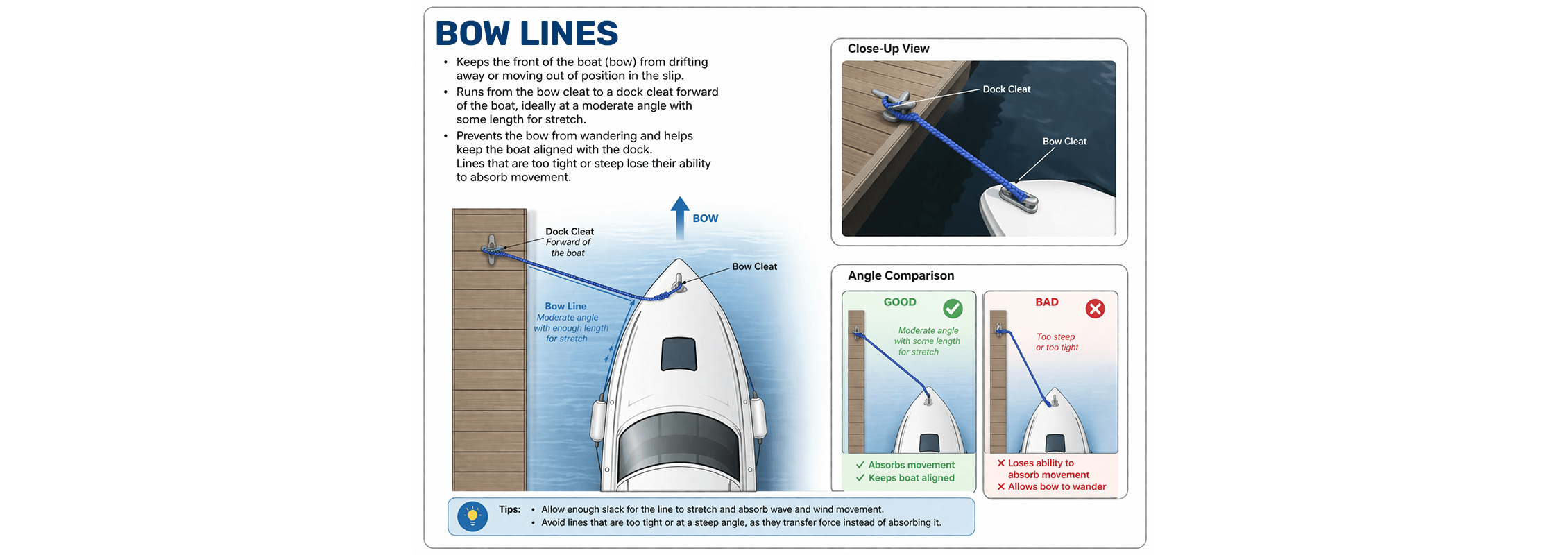
| Bow Lines | Keeps the front of the boat (bow) from drifting away or moving out of position in the slip. | Runs from the bow cleat to a dock cleat forward of the boat, ideally at a moderate angle with some length for stretch. | Prevents the bow from wandering and helps keep the boat aligned with the dock. Lines that are too tight or steep lose their ability to absorb movement. |
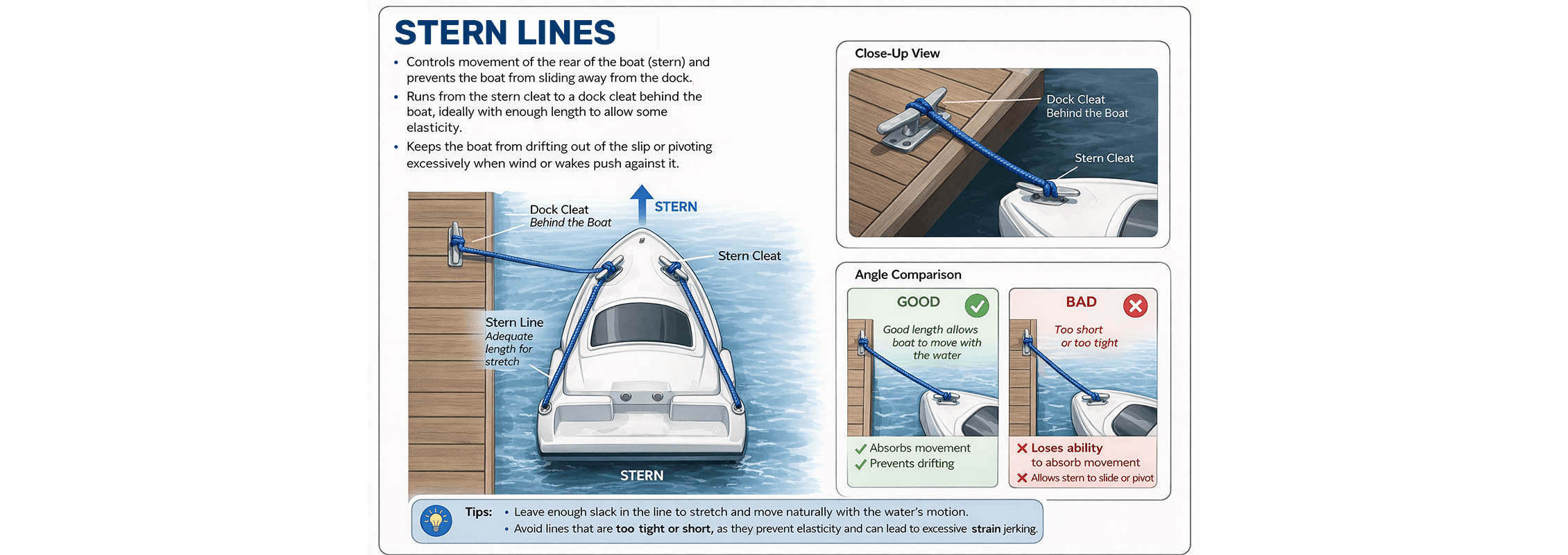
| Stern Lines | Controls movement of the rear of the boat (stern) and prevents the boat from sliding away from the dock. | Runs from the stern cleat to a dock cleat behind the boat, ideally with enough length to allow some elasticity. | Keeps the boat from drifting out of the slip or pivoting excessively when wind or wakes push against it. |
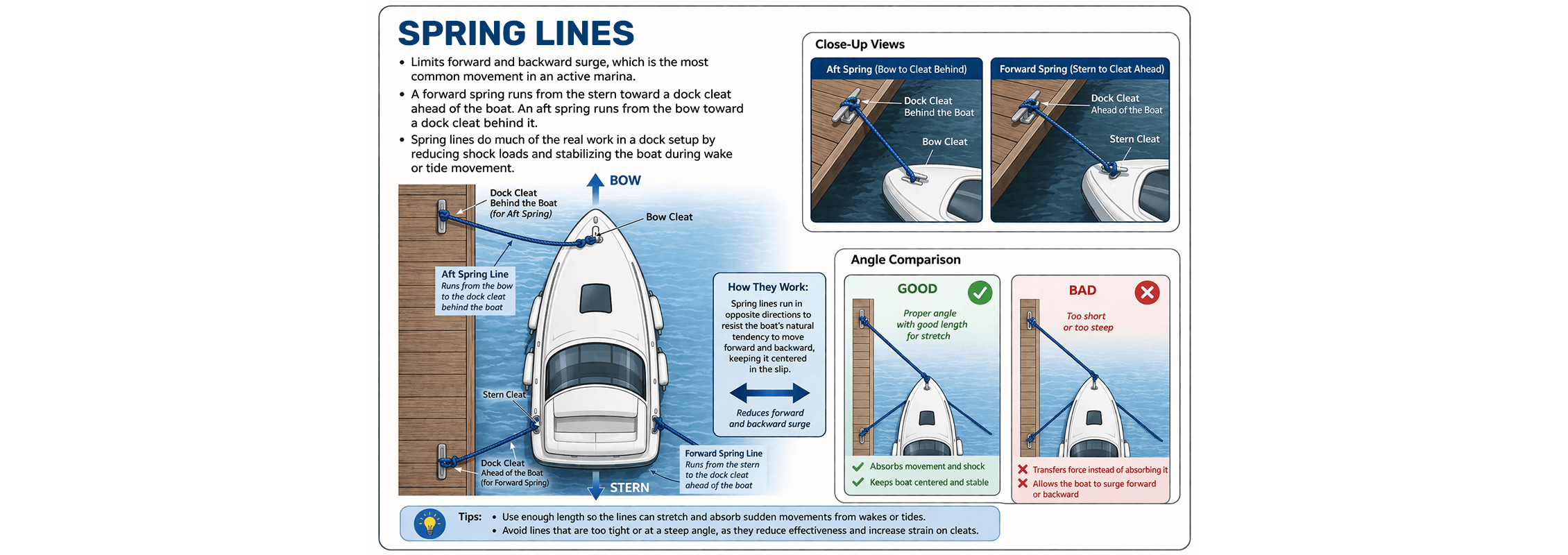
| Spring Lines | Limits forward and backward surge, which is the most common movement in an active marina. | A forward spring runs from the stern toward a dock cleat ahead of the boat. An aft spring runs from the bow toward a dock cleat behind it. | Spring lines do much of the real work in a dock setup by reducing shock loads and stabilizing the boat during wake or tide movement. |
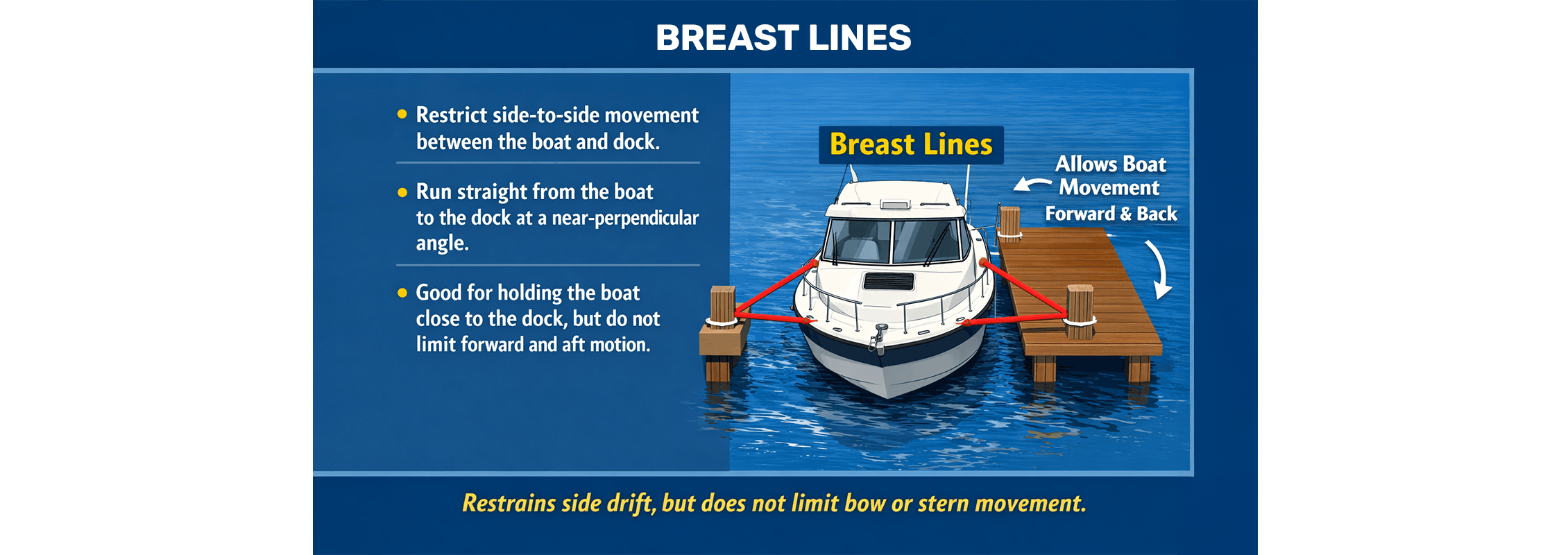
| Breast Lines | Restricts side-to-side movement between the boat and dock. | Runs straight from the boat to the dock, usually at a near-perpendicular angle. | Helpful for keeping the boat close to the dock, but they do not replace spring lines because they do little to control forward and aft motion. |
| Line Type | Main Advantage | Main Tradeoff | Best Fit |
| Nylon | Strong with good shock absorption | Needs inspection for UV and wear over time | Best all-around choice for primary dock lines |
| Polyester | Lower stretch and firmer under load | Less forgiving in wake, wind, and surge | Specialty use where low stretch matters |
| Polypropylene | Lightweight and inexpensive | Poor choice for permanent docking | Temporary or lighter-duty use only |
| 3-Strand Nylon | Proven, durable, easier to splice | Rougher handling than double braid | Practical everyday dock setups |
| Double Braid Nylon | Smooth handling and clean finish | Usually costs more | Boaters who want comfort and easier handling |
| Boat Length | Baseline Dock Line Diameter | Consider Stepping Up If... |
| Under 27 ft | 3/8 in. | The boat is heavy for its length, the slip is exposed, or it regularly sees strong wake or current |
| 28 to 35 ft | 1/2 in. | The boat carries more weight, sits in a windy berth, or deals with tide and surge |
| 36 to 45 ft | 5/8 in. | The slip is rough, the boat loads up hard in weather, or dock conditions stay active |
| Over 45 ft | 3/4 in. | The boat is heavily built, the berth is open and exposed, or storm conditions are a real concern |
| Line Type | Recommended Length | Why It Works | Adjust Longer When... |
| Bow lines | About 2/3 of boat length | Helps control the bow without forcing a short, stiff lead | The slip is exposed, tidal, or the tie-off point is farther away |
| Stern lines | About 2/3 of boat length | Keeps the stern in position while allowing some movement | The boat sits high, the dock layout is awkward, or conditions stay active |
| Spring lines | About the full boat length | Gives enough lead to control forward and aft surge more smoothly | Wake, current, tide, or storm conditions put more load on the setup |
| Storm setup lines | Longer than everyday dock lines | Adds room for surge, water-level change, and more forgiving line angles | Heavy weather, storm surge, or unusually high loads are expected |
| Marina Condition | What Changes at the Dock | Dock Line Priorities | Practical Takeaway |
| Non-tidal lake slips | Water levels stay fairly steady, but wind and passing wake can still move the boat around more than owners expect. | Use quality nylon lines with enough give to absorb movement, and do not skip spring lines if the slip gets rolled by traffic or afternoon chop. | Stable water does not mean no load, so the goal is a clean, forgiving setup that keeps the boat centered without tying it down like a drum. |
| Tidal coastal marinas | The boat has to rise and fall with the tide, often with current working on it at the same time. | Run lines with enough length to handle water-level change, build in proper spring lines, and protect any spot where chafe can start chewing away at the line. | A tidal setup needs room to move, because lines that are too short or too tight can get ugly fast when the water starts shifting. |
| Hurricane-prone areas (Florida & Gulf) | Storm surge, heavy wind, and violent load changes can turn an everyday dock setup into a weak link in a hurry. | Longer storm-ready lines, extra spring lines, chafe protection, and enough redundancy to spread the load all matter when bad weather is on the table. | This is no place for bare-minimum rigging, because the lines have to handle the kind of punishment that exposes every lazy decision. |
| Narrow shared slips | There is less room for drift, swing, and sloppy line leads, so small mistakes show up fast. | Keep the boat centered with properly sized lines, tight control of side-to-side movement, and fenders placed where contact is most likely. | Tight slips reward precision, not brute force, so the job is to control movement cleanly without making the whole setup too rigid. |