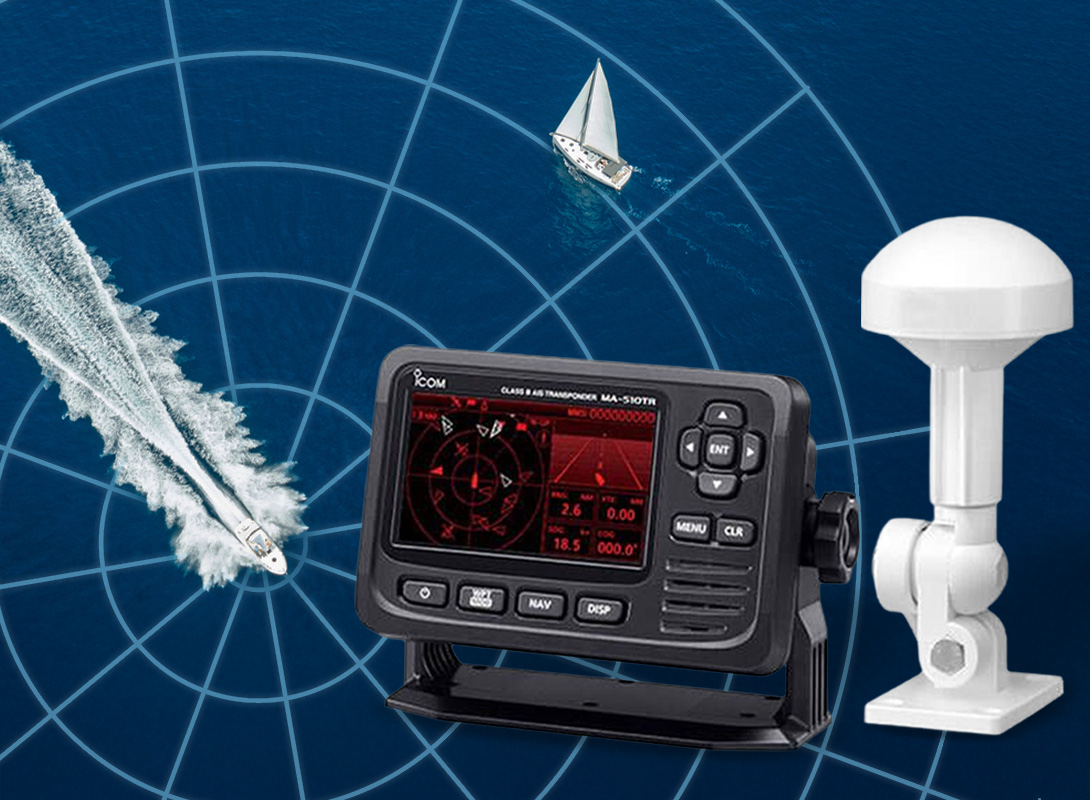
Fortunately, DIY boaters don’t need an engineering degree to do the job right. With a small time investment, anyone can learn what AIS actually does, get familiar with the equipment you need, and install it cleanly and confidently on real-world boats.

Whether you’re running a sailboat in shipping lanes, cruising the ICW, or heading offshore in a powerboat, AIS is one of the most straightforward safety upgrades you can make. And understanding the basics of AIS installation (and common mistakes to avoid) will help ensure that you have a system that works reliably when it matters most.

Shop Popular AIS Equipment

What Is AIS and Why It Matters for Boaters

Automatic Identification System (AIS) is a vessel-tracking system that broadcasts and receives key information like position, speed, course, and vessel identity. It gives you a clearer picture of what’s around you, even when visibility is poor or traffic gets tight. Used correctly, AIS reduces guesswork and helps boaters make safer decisions sooner, not later.

How AIS Works

AIS uses a dedicated VHF signal to automatically transmit your boat’s position and receive the same data from other AIS-equipped vessels nearby. That information is displayed on a chartplotter, MFD, or computer, showing real-time targets with names, headings, and speeds.

Unlike radar, AIS doesn’t rely on line-of-sight returns or reflections. If another vessel has AIS turned on and you have a receiver, you’ll see them clearly even in darkness, fog, or behind land or weather.

AIS vs. Radar vs. VHF

AIS, radar, and VHF all improve safety, but each serves a different role onboard. Radar shows physical targets around you, and VHF allows direct voice communication, but neither tells you who a vessel is or what it intends to do. AIS fills that gap by broadcasting and receiving vessel identity, position, speed, and course information, giving boaters clearer situational awareness (especially in poor visibility or high-traffic areas) without replacing the other systems they already rely on.

Tool What It Tells You Strengths Limitations
AIS Who a vessel is, where it is, where it’s headed (plus name/MMSI, speed, course) Great for identifying targets and predicting close passes; works well at night/low visibility if the other boat is transmitting Only shows AIS-equipped vessels with AIS turned on; won’t show buoys, land, or non-transmitting targets
Radar Physical targets around you (land, boats, squalls) Sees “hard” objects regardless of AIS; useful in fog/rain (with proper tuning) and for collision avoidance Needs tuning and interpretation; clutter/rain/sea state can reduce clarity; small targets can be hard to pick up
VHF Radio Voice communication (and DSC if equipped) Lets you hail vessels and coordinate intentions; critical for emergencies and bridge-to-bridge calls Doesn’t automatically show position/track; relies on correct channel use and someone answering

Who Should Install AIS (and Who May Not Need It)

AIS makes the most sense for boaters who run in traffic, cruise offshore, travel at night, or share water with commercial vessels. Sailors, ICW cruisers, offshore anglers, and long-range powerboat owners all benefit from the added awareness AIS provides.

On the other hand, boaters who stay strictly in small inland waters or operate only in low-traffic areas may see less value. But even then, AIS can still be worthwhile if you want an extra margin of safety without adding complexity to your navigation setup.

Shop Marine Navigation Equipment

AIS System Types Explained

AIS systems fall into two main categories: AIS receivers, which let you see other vessels, and AIS transponders, which also let you be seen by other vessels, as well as shore stations. And understanding that distinction will help you choose the right system for most boats.

AIS Receivers (Receive-Only)

AIS receivers allow you to view AIS-equipped vessels on your chartplotter, including their position, course, and speed. They improve situational awareness but do not broadcast your own boat’s location. In other words, receivers make sense for boaters who want basic visibility of commercial traffic without transmitting, but they offer less overall safety benefit than a transponder.

AIS Transponders (Class B, Class B+, Class A)

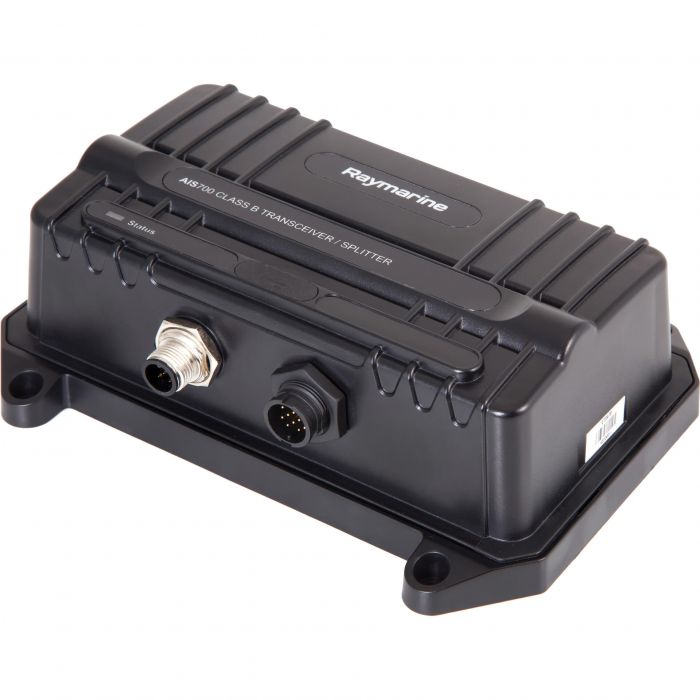
AIS transponders both receive AIS data and transmit your boat’s information so other vessels can see you. For recreational boaters, this added visibility is often the biggest safety advantage AIS provides, and Class B is usually sufficient for most DIY installations. Higher-power options like Class B+ and Class A transmit more frequently and at greater range, making them better suited for high-traffic waters, commercial use, or serious offshore cruising where maximum visibility to other vessels is critical.

Class Best For Examples
Class B Most recreational sailboats and powerboats Icom Class B AIS Transponder with External Antenna

Em-Trak B952 5W SOTDMA Class B AIS Transceiver with WiFi & Bluetooth
Class B+ Faster boats or heavy-traffic areas Digital Yacht Class B+ AIS Transponder with USB & Wifi

Furuno Black Box Class B+ AIS Transponder
Class A Commercial and regulated vessels Raymarine AIS5000 Class A AIS Transceiver

Furuno Color LCD Class A AIS Transponder

Which AIS Is Right for Your Boat?

The right AIS setup depends on how you use your boat and the waters you run in, not on chasing the highest spec. Thinking through boat type, speed, and typical operating conditions will point you toward the option that delivers the most real-world safety benefit.

  • Sailboats: Benefit most from being visible to commercial traffic, especially offshore or at night.
  • Powerboats: Faster speeds favor transponders, with Class B+ making sense in busy waterways.
  • Coastal vs. offshore use: The more traffic, distance, or low-visibility running you do, the more sense a transponder makes.

What You Need Before Installing AIS

A clean AIS install starts with having the right pieces on hand before you start drilling holes or pulling wire. AIS is simple when you treat it like any other onboard electronics job: solid power, clean data connections, and an antenna setup that makes sense for your boat.

Shop Popular Marine Electronics

Required Components Checklist

Before you pick up a drill or start running wires, take a few minutes to confirm you have all the required components on hand. A complete, well-planned setup reduces installation time, prevents wiring mistakes, and helps ensure your AIS system works correctly the first time you power it up. So check that you have everything you need before you start to ensure a smooth installation:

  • AIS unit: Receiver or transponder, sized to your use (and compatible with your chartplotter/MFD if you want on-screen targets).
  • MMSI documentation (transponders): You’ll need your MMSI and vessel details to program the transponder correctly—don’t guess or “fill it in later.”
  • GPS source: Some AIS units have internal GPS; others need an external GPS input or networked GPS position from your system.
  • Antenna: Either a dedicated AIS antenna or a shared VHF antenna using a proper splitter (more on that below).
  • Power & data cabling: Correct fuse protection, marine-grade wiring, and the right data cable/connectors for your network (NMEA 0183 or NMEA 2000).

AIS Antenna Options

Your AIS performance is only as good as your antenna setup, so this is not an area to treat as an afterthought. Antenna choice and placement directly affect range, reliability, and how consistently other vessels can see you, especially in busy waterways or reduced visibility conditions. You’ve got two practical options:

  • Dedicated AIS Antenna: Best performance and simplest troubleshooting. It keeps AIS independent from your VHF setup and avoids “one system takes down the other” headaches. (Internal link: AIS antennas)
  • VHF Antenna Splitter: Lets AIS share your existing VHF antenna without adding another antenna mount. It’s a clean option when space is limited, but it has to be the right splitter for AIS; this isn’t the place to improvise.

Shop AIS Antenna Options

Power & Networking Basics (NMEA 0183 vs. NMEA 2000)

AIS needs two fundamentals to work properly: reliable power and a clean data path to your display or network. Getting either one wrong can limit performance, create intermittent targets, or prevent AIS data from showing up at all.

  • NMEA 0183: An older, point-to-point wiring standard that’s still widely used and very reliable when installed correctly. It requires manual configuration—matching talker and listener wires, setting the correct baud rates, and confirming you’re using the proper input and output pairs.
  • NMEA 2000: A newer, plug-and-play backbone network that simplifies installation and allows AIS and GPS data to be shared across multiple devices. When properly powered and terminated, it’s usually the cleanest and most flexible option for modern electronics installs.

If your boat already has a properly built NMEA 2000 network, adding AIS is often straightforward. Boats running mostly NMEA 0183 can still be excellent candidates for AIS, but only as long as you wire carefully, double-check settings, and verify data flow before closing everything up.

Step-by-Step AIS Installation Overview

Installing AIS isn’t complicated, but it does require a methodical approach to avoid signal issues, data errors, or unreliable performance. The overview below walks through the core steps most boaters will follow, regardless of boat type or AIS brand.

Step 1: Choose Mounting Location

Start by selecting a dry, secure mounting location that’s protected from vibration, heat, and water intrusion. AIS units are typically installed near the chartplotter, navigation station, or electrical panel to keep wiring runs short and organized. Make sure the location allows access for programming, troubleshooting, and future service.

Step 2: Install or Share an Antenna

AIS performance depends heavily on antenna quality, placement, and cabling. Whether you install a dedicated AIS antenna or use a VHF antenna with a proper splitter, all connections should be clean, corrosion-free, and securely fastened. Avoid tight bends, cheap adapters, or splices that can quietly reduce range and reliability.

Step 3: Connect Power Safely

AIS units should be powered from a dedicated, fused circuit using marine-grade wiring. Avoid tapping into existing electronics circuits that may introduce voltage drop or electrical noise. A clean, stable power supply helps prevent intermittent shutdowns, lost targets, and data dropouts underway.

Step 4: Program MMSI & Boat Data (Transponders)

AIS transponders must be programmed with a valid MMSI and accurate vessel information before they can transmit. In the US, FCC rules require this programming to be completed by the installer or an authorized dealer, not the end user. Double-check all vessel details during setup, because incorrect data can create safety issues and is often difficult to change later.

Step 5: Connect to MFD

Once powered and configured, the AIS needs to be connected to your chartplotter or multifunction display so targets can be viewed on screen. This may be done via NMEA 0183 wiring or through an existing NMEA 2000 network, depending on your setup. After connecting, confirm that AIS targets appear correctly and update in real time.

Step 6: Test Your AIS System

Testing should be done both at the dock and underway to confirm proper operation. Verify that you’re receiving nearby AIS targets, and for transponders, confirm that your vessel is visible to other AIS-equipped boats or tracking services. A short test run now can catch wiring or configuration issues before you rely on the system in real-world conditions.

AIS Installation Checklist

Step Task What to Check Before Moving On
1 Choose mounting location Unit is dry, secure, well-ventilated, and accessible for service and programming
2 Select AIS unit type Receiver vs. transponder chosen based on visibility needs, cruising area, and regulations
3 Install or share an antenna Antenna mounted as high as practical, cabling clean and uninterrupted, no improper splitters
4 Route antenna cabling Coax runs are smooth, supported, and kept clear of sharp bends, power cables, and interference sources
5 Connect power safely Dedicated fused circuit, marine-grade wire, solid ground, stable voltage under load
6 Confirm data network NMEA 0183 wiring pairs correct or NMEA 2000 backbone properly powered and terminated
7 Program MMSI & vessel data (Transponders) MMSI, vessel name, call sign, and dimensions verified and programmed by installer/dealer (US)
8 Connect to chartplotter / MFD AIS targets appear on-screen, target labels display correctly, no data conflicts
9 Dockside test Nearby AIS targets received, GPS position valid, alarms configurable
10 Underway test Targets update with speed and course changes; transponder visible to other vessels

Common AIS Installation Mistakes to Avoid

Most AIS problems trace back to a few avoidable setup mistakes, not bad equipment. Paying attention to these fundamentals will save you hours of troubleshooting and keep your system working when conditions aren’t forgiving.

  • Antenna height and placement errors: AIS range depends heavily on antenna height and a clear view of the horizon. Antennas mounted too low, too close to other antennas, or near metal structures will underperform.
  • Improper grounding: Poor grounding can cause interference, weak transmissions, or intermittent failures. Always follow manufacturer guidance and tie into a proper vessel ground.
  • Using non-marine cabling: Household or automotive wire doesn’t hold up in a marine environment. Use tinned, marine-grade wire and quality connectors to prevent corrosion and voltage drop.
  • Incorrect MMSI programming: Entering the wrong MMSI or vessel data can make your AIS information misleading or unusable. For transponders, MMSI programming must be done correctly the first time.
  • Overloading VHF antennas without splitters: Never connect AIS and VHF to the same antenna without an AIS-rated splitter. Doing so can damage equipment and degrade both systems.

AIS Installation Tips by Boat Type

Different boats present different installation challenges, mostly driven by antenna height, available space, and how the boat is used. Focus on the details that matter the most for your boat type.

Sailboats

Sailboats benefit more than almost any other recreational boat from AIS visibility, especially around commercial traffic. Masthead antenna placement delivers excellent range, but it also means longer cable runs, so pay close attention to coax quality and routing.

Keep AIS antennas well separated from other mast-mounted electronics to reduce interference. If you’re sharing a VHF antenna, use a proper splitter and confirm it’s rated for masthead installations.

Powerboats

Powerboats close distances quickly, which makes reliable AIS updates especially valuable. Antenna placement is often lower than on sailboats, so mounting it as high and clear as possible pays dividends in range.

On faster boats, make sure the AIS unit is securely mounted and well ventilated. Clean power and solid network connections help prevent dropouts when engines are running at higher RPMs.

Trailer Boats & Small Craft

Space and simplicity matter most on smaller boats. Compact AIS units paired with a dedicated antenna or quality splitter keep installs clean and manageable.

Antenna height is limited, so don’t expect ship-level range, but even modest AIS performance adds awareness in traffic. Keep wiring short, protected, and easy to disconnect if the boat is trailered frequently.

Offshore & Long-Range Cruisers

For offshore boats, AIS should be treated as a core safety system, not an accessory. Prioritize antenna height, redundancy, and clean integration with your chartplotter and GPS sources.

Dedicated AIS antennas are often worth it on cruising boats to avoid single points of failure. Before heading offshore, confirm transmission and reception under real conditions, not just at the dock.

AIS Compliance, Safety, and Best Practices

AIS is a safety tool meant to improve awareness and reduce close-quarters risk. Using it correctly means understanding the basics around requirements, privacy, and when transmission actually helps.

Legal Requirements (General Guidance)

AIS is not required for most recreational boats in the US, but it is mandatory for certain commercial and regulated vessels. If you install an AIS transponder, it must be programmed correctly and operated in line with FCC rules and international AIS standards.

Requirements can change by region, especially outside the US Boaters cruising internationally should confirm local expectations before transmitting.

Privacy & Transmit Settings

AIS transponders broadcast your boat’s identity, position, speed, and course to nearby vessels. That visibility is intentional, but it also means your movements may be visible beyond just the boats around you.

Most units offer basic controls such as silent mode or transmit settings. Know how your system handles these options so privacy choices are deliberate, not accidental.

When to Leave AIS On or Off

AIS should generally be on when underway, especially in traffic, low visibility, at night, or offshore. That’s when being visible to other vessels provides the most safety value.

Some boaters choose to turn AIS off when anchored in remote areas or when privacy is a concern. If you do, make it a conscious decision—and make turning it back on part of your pre-departure routine.

AIS Products & Accessories to Consider

A reliable AIS install comes down to using the right components and not cutting corners on the supporting gear. These are the core AIS-related product categories that matter most, with each one playing a specific role in system performance and reliability.

  • AIS Transponders: The most complete AIS solution, allowing you to both see nearby AIS targets and be seen by other vessels. Best suited for boaters operating in traffic, at night, or offshore.
  • AIS Receivers: Receive-only units that display AIS targets on your chartplotter without transmitting your own position. A simpler option for basic situational awareness.
  • AIS Antennas & Splitters: Antennas and AIS-rated VHF splitters directly affect range and reliability. A dedicated AIS antenna offers the best performance, while a proper splitter allows AIS and VHF to share an antenna safely.
  • Mounting Hardware & Cabling: Clean installs depend on secure mounts, marine-grade wiring, quality connectors, and proper fuse protection. These small components often determine whether an AIS system works flawlessly or becomes a troubleshooting headache.

FAQs: AIS Installation & Setup

Do I need a dedicated AIS antenna?

A dedicated AIS antenna provides the best performance and keeps your AIS system independent from your VHF radio. It’s the cleanest option, especially if you have room to mount another antenna and want to avoid shared-system compromises.

Can AIS share my VHF antenna?

Yes, AIS can share a VHF antenna if you use a proper AIS-rated splitter designed for that purpose. Never connect AIS and VHF to the same antenna without a splitter, as it can damage equipment and degrade performance.

How hard is it to install AIS yourself?

For most DIY boaters, installing AIS is a straightforward electronics project involving basic wiring, antenna routing, and network connections. The key is taking your time, following the install order, and not cutting corners on power or antenna setup.

Does AIS work without a chartplotter?

AIS can work without a chartplotter if it’s connected to a computer, tablet, or other display that can show AIS data. That said, most boaters get the most value from AIS when it’s integrated directly into a chartplotter or MFD.

Can I install AIS on a small boat?

Yes, AIS works on small boats as long as you have power, an antenna, and a way to view the data. Range will be more limited due to antenna height, but AIS can still add valuable awareness in traffic.

Is AIS required by law?

AIS is not required for most recreational boats in the US, but it is mandatory for certain commercial and regulated vessels. If you install an AIS transponder, you are responsible for using it in accordance with FCC rules and applicable regulations.

How far can AIS signals reach?

AIS range is primarily line-of-sight and depends on antenna height and placement. In real-world conditions, small boats may see ranges of 5-15 miles, while higher antennas and larger vessels can extend that significantly.