 Shopping from Canada?
  Go to Defender Canada!



How to Guide: Store Boat Batteries During the Winter
*When the boating season ends, your batteries deserve as much attention as your engine or hull. Improper storage can lead to reduced capacity, corrosion, or even total failure come spring, and replacing marine batteries isn’t cheap.
Battery care is one of the most overlooked parts of winterization. Whether you’re a weekend cruiser, liveaboard sailor, or freshwater angler, taking time now to protect your boat’s power system means easier starts, longer battery life, and fewer surprises when launch day arrives.
This guide walks you through how to store boat batteries for winter, safely, efficiently, and in line with regional needs from Maine to the Gulf.*
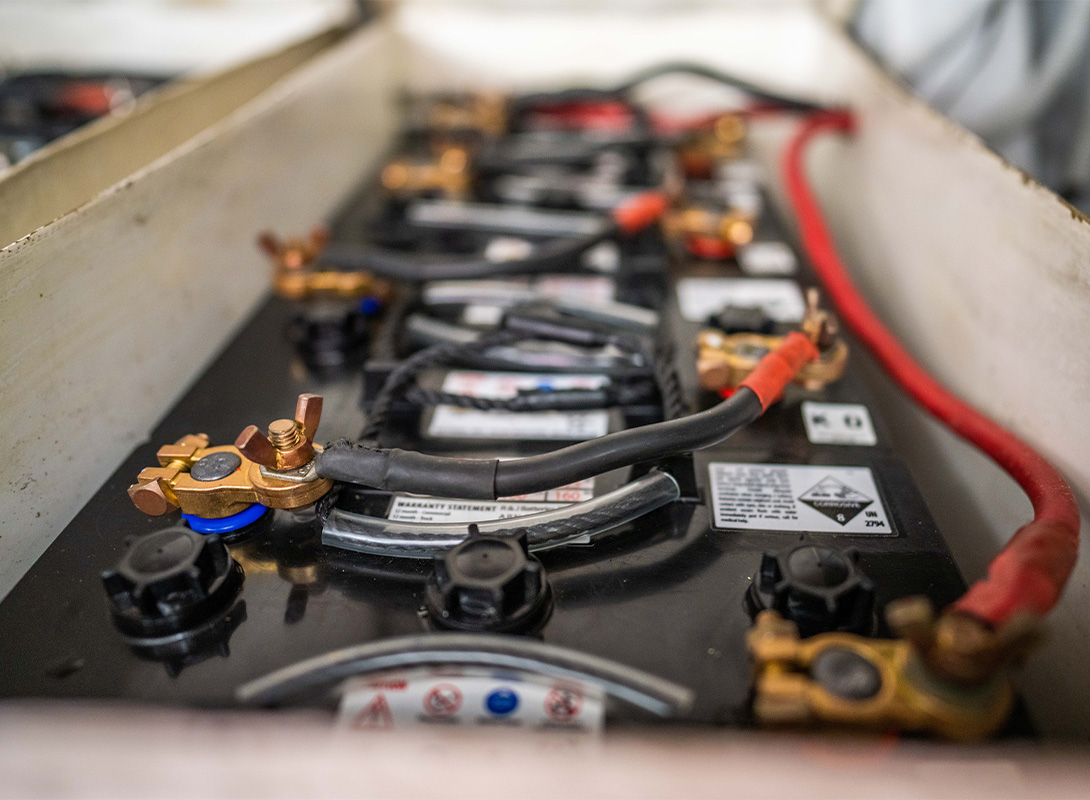
Why Winter Battery Storage Matters
Your boat’s battery is the heart of every onboard system, from your engine starter to your electronics, and winter is the hardest season on it.
When temperatures drop, the chemical reactions inside the battery slow down, cutting its capacity and accelerating discharge. A neglected battery can lose up to 10% of its charge per month in cold storage, and sulfation (the buildup of lead sulfate crystals on the plates) can make that loss permanent.
Even in warmer regions, leaving a battery idle and unmaintained can cause corrosion, electrolyte evaporation, or parasitic drain from onboard systems. Over a few months, that neglect can lead to a costly spring surprise: a dead or damaged battery that won’t hold a charge.
Proper winter battery storage prevents these problems before they start. By fully charging your batteries, cleaning terminals, and keeping them in a climate stable environment, you preserve both performance and lifespan. Indeed, a well-maintained marine battery can last twice as long as one that sits unattended through the off-season.
Proper storage practices also help prevent corrosion on terminals and cabling, a leading cause of poor connectivity and voltage drop in the spring. Applying a corrosion inhibitor or dielectric grease creates a moisture barrier that keeps your electrical system healthy through months of humidity or temperature swings.
Step-by-Step: How to Store Boat Batteries Safely
Storing your boat batteries for the winter isn’t complicated. Whether you’re pulling your batteries from a sailboat in Maine or keeping your cruiser ready in Florida, these steps ensure they stay charged, clean, and corrosion-free all season long.
Step 1: Inspect and Clean the Terminals
Before doing anything else, visually inspect your batteries for cracks, bulges, or leaking electrolyte. If you see corrosion on the terminals, neutralize it with a baking soda and water solution, rinse, and dry thoroughly. And once clean, coat the terminals and cable ends with dielectric grease or a corrosion inhibitor to prevent oxidation during storage.
Step 2: Fully Charge the Batteries
A fully charged battery resists freezing and sulfation far better than one that’s partially drained. Use a smart marine charger that automatically switches to maintenance mode once the battery reaches full capacity. And never rely on an automotive battery charger. Marine battery chargers are designed for deep-cycle and AGM batteries, and maintain voltage safely over time.
Step 3: Disconnect Power Cables
To avoid accidental short circuits, disconnect the negative cable first, followed by the positive. Labeling each cable or taking a photo before disconnecting your battery will also help you save time reinstalling it in the spring. And for boats left in the water, isolate the battery circuit using a marine-rated disconnect switch to prevent parasitic drain.
Store in a Cool, Dry Location
If possible, remove the batteries from the boat and store them indoors where the temperature stays between 40°F and 70°F. But avoid placing them directly on concrete or metal surfaces.
Instead, use a wooden board or non-conductive mat to reduce heat transfer and moisture exposure. And check fluid levels on flooded lead-acid batteries, topping them with distilled water if needed before storing.
Maintain Charge Monthly or Use a Trickle Charger
Even in storage, batteries slowly discharge. So either check the voltage monthly and recharge when it drops below 12.5V or connect a trickle maintainer to keep them topped off automatically. If your boat is stored outdoors, consider a solar panel maintainer to offset natural discharge and keep your batteries healthy through the off-season.
Reinstall and Test Before Spring Launch
When you reinstall your batteries in the spring, connect your cables in reverse order: positive first, negative second. Then torque the terminals to the manufacturer specs.
Next, reconnect your charger or onboard power, and test your voltage under load to confirm full readiness. Then take a few extra minutes to inspect cables, clamps, and fuse blocks for corrosion or fraying before heading out on the water.
→ See our Wiring Tips Guide for reinstallation best practices.
Choosing the Right Charger or Maintainer
Keeping your boat batteries healthy all winter isn’t just about starting with a full charge. It’s also about how you maintain it over several months.
The right device prevents sulfation, balances voltage, and extends battery life without cooking your cells. And since not all chargers are alike, you should know how to pick what best fits your boat, climate, and storage setup.
Smart Marine Chargers
For boats with access to AC power, smart chargers are the safest “leave-it-on” option. They cycle through bulk, absorption, and float to keep batteries topped without overcharging.
- Best for long-term storage with AC power. Multi-stage charging (bulk→ absorption→ float) tops up quickly, then holds safely for months without attention.
- Broad chemistry support (check your model). Many smart chargers handle Flooded, AGM, Gel, and some Lithium; match each bank to a single chemistry for accurate profiles.
Can stay connected all season with built-in safeguards that reduce risk of overcharge and stratification.
Trickle Chargers
When you’re storing indoors or only for a short stretch, a basic trickle charger offsets self-discharge. Just plan quick voltage checks so a full battery doesn’t creep into overcharge.
- Good for short-term or indoor storage. A steady, low current offsets self-discharge in smaller systems or during shoulder seasons.
- Needs periodic check-ins. Plan a quick voltage check every few weeks to avoid creeping overcharge on full batteries.
Simple, affordable, and dependable—just add a calendar reminder and you’re set.
Solar Maintainers
No shore power? A compact solar maintainer counters parasitic loads using free sunlight. Clean the panel and aim it well—winter rays can still maintain a healthy float in mild climates.
- Ideal without shore power. Panels use free sunlight to counter parasitic loads on moored or trailered boats.
- Set-and-forget with light upkeep. Keep the panel clean and angled; even winter sun can maintain float levels in mild climates.
A strong choice for Florida, the Gulf Coast, and the Pacific Northwest where off-season daylight is still workable.
→ Browse Solar Battery Maintainers & Panels
Pro Tip: Always match the charger profile to your battery chemistry (Flooded, AGM, Gel, or Lithium). The wrong profile can undercharge AGM/Gel or unbalance Lithium packs—check your manual, then set it once and label the leads.
→ Learn more in our Battery Selection Guide
Regional Storage Considerations
Where and how you store boat batteries over the winter depends heavily on climate. Cold, humidity, and salt exposure each create unique challenges—so your plan should match your region’s conditions. Use the guidance below to dial in storage, charging cadence, and corrosion control without overcomplicating the job.
Northeast & Great Lakes — Cold-Weather Storage
In true winter climates, remove batteries from the boat and bring them indoors to a dry, heated space. Aim for roughly 40°F–70°F to prevent freezing and capacity loss, and give the bank a full charge before you move it. Through the off-season, either recharge monthly or keep a quality smart charger connected so it can float safely; a quick wipe, fresh terminal protection (dielectric grease), and clean battery box will set you up for a painless spring. If you’re storing on a concrete floor, place the batteries on a non-conductive pad or board to buffer temperature swings.
- Consider a multi-bank smart charger and a small kit of corrosion protection products for “set-and-forget” maintenance.
Florida & Gulf Coast — Corrosion & Moisture Control
Freeze risk is low, but salt air and heat are relentless. If the boat stays dockside, you can leave batteries aboard but disconnect loads and focus on keeping connections clean, dry, and protected. A light coat of inhibitor spray on terminals and cable ends goes a long way, and a solar maintainer offsets parasitic drain while reducing time on shore power. During haul-outs—especially tied to hurricane prep—remove batteries and secure them in a safe, ventilated place until relaunch.
- Pair a compact solar maintainer with a corrosion inhibitor spray and reapply after any heavy weather.
Pacific Northwest — Moisture & Mildew Management
Persistent rain and cool, damp air make moisture control the main event. Store batteries in a ventilated, dry location; if that’s a garage or shed, add desiccant packs or a small fan to keep air moving. Inspect terminals periodically for oxidation, reapply protective grease as needed, and use a smart charger with temperature compensation so the float voltage stays accurate in cooler spaces. Keep the battery compartment itself dry and open between checks to discourage mildew.
- Dehumidifiers or low-draw cabin fans plus a temp-compensating marine charger provide reliable, low-touch winter care.
Defender Tip: Wherever you store your boat, check voltage every 30–45 days. A healthy 12V battery should stay above ~ 12.5V—if it dips lower, recharge promptly to prevent sulfation.
Top Products for Battery Winterization
After your batteries are charged and disconnected, a few smart add-ons keep them protected all season. Think of these as low-cost insurance against moisture, corrosion, and accidental drain so spring commissioning is just “connect and go.”
Corrosion Inhibitors & Dielectric Grease
A thin, even coat on posts, lugs, and cable ends seals out oxygen and salt air, slowing the electrochemical creep that turns bright copper dull and crusty. Apply after you’ve cleaned and tightened everything; it’ll also make spring removal easier because terminals won’t bond themselves together.
Battery Boxes & Trays
Boxes do more than tidy up—they stabilize batteries, contain any acid mist, and guard against accidental shorts from loose gear. For trailer boats and garage storage, a strapped, vented box on a secured tray keeps batteries upright and out of harm’s way during the off-season shuffle.
→ Explore Battery Boxes & Mounting Trays
Terminal Cleaners & Maintenance Kits
Start clean, stay clean. Neutralizing spray, a post brush, and a handful of felt washers remove existing corrosion and stop new deposits from forming while the boat sits. Come spring, you’ll spend minutes reconnecting instead of an afternoon wrestling with stubborn clamps.
Moisture Control Gear
Damp air accelerates corrosion and wicks into wiring. A compact dehumidifier, circulator fan, or moisture absorber cuts condensation in cabins and garages, protecting terminals, harnesses, and nearby electronics. In especially wet climates, keep air moving and replace desiccants mid-winter.
→ Browse Marine Dehumidifiers & Ventilation
Battery Disconnect Switches & Monitors
A simple rotary switch isolates the bank to eliminate parasitic loads, while a voltage or shunt monitor lets you spot self-discharge before it becomes sulfation. Together, they extend battery life and remove the guesswork from winter check-ins.
FAQs: Boat Battery Winterization
Quick answers to the most common winter storage questions—so you can avoid sulfation, surprise drain, and springtime no-starts. Skim these before you button up the boat, then refer back during mid-winter check-ins.
Check the date code or label. Most marine batteries last 3–5 years; if it struggles to hold charge or shows bulging or leakage, it’s time to replace it.
Yes. Lithium batteries shouldn’t be charged below 32°F (0°C) and should be stored around 50% charge in a cool, dry area. Use a lithium-compatible charger for off-season maintenance.
Store batteries separated by at least an inch to prevent heat transfer and allow airflow. Label and test each battery individually before reinstalling in spring.
Absolutely. Even small standby draws can drain batteries over time. Disconnect electronics or use a battery disconnect switch to eliminate parasitic load.
No. Always use marine-grade, grounded cords rated for outdoor use. Standard cords can overheat or short out in damp storage environments.
→ Explore Next: Winterizing Your Boat Guide | Battery Selection Guide