 Shopping from Canada?
  Go to Defender Canada!



The Best Space Heaters for Winterizing Liveaboard Boats
Winter brings unique challenges for liveaboard boaters. As temperatures drop, condensation, corrosion, and comfort become real concerns aboard. So keeping your vessel warm and dry is about more than just comfort. It’s also about essential maintenance.
A reliable marine space heater can make life aboard far more livable through the cold months. Whether you’re plugged into shore power or anchored off-grid, the right heating system will keep your cabin warm, dry, and safe.
In this Defender guide, we’ll explore the best marine space heaters for 2025/2026, discuss safety practices, and share tips on insulation and moisture control to help you winterize your boat the smart way.
Why Heating Matters When Living Aboard in Winter
Winter heating is about more than just staying warm. Without it, boats become breeding grounds for condensation, mildew, and corrosion, all of which compromise comfort, safety, and the longevity of your vessel.
Condensation will ruin electronics, cause mold growth, and damage wooden interiors. So heating your boat properly throughout the winter prevents excess moisture buildup that leads to costly repairs.
Check out Defender’s Winterizing Guide for a full checklist.
Types of Marine Space Heaters
There are different types and styles of marine heaters, and the one that’s best for you depends on boat size, power setup, and where you’ll be cruising. Each, of course, comes with its own considerations, and understanding the differences will ensure that you choose the right one for your vessel and the climate you’re operating in.
Electric Heaters
Electric heaters are the simplest and safest option for dockside liveaboards. They plug into shore power outlets, and offer quiet, consistent heat without fuel lines or exhaust concerns.
Marine-rated models like the Caframo True North and Caframo Pali are built for confined spaces, featuring overheat protection and low-tipping risks. But when installing your electric heater, it’s important to always use marine-safe cords and follow wiring best practices.
Check out Defender’s Wiring Tips.
Diesel Heaters
Diesel heaters are a favorite for full-time cruisers who spend long winters off-grid. They deliver powerful, dry heat and use the same fuel your engine already carries.
Brands like Webasto and Espar are known for their reliability and efficiency. However, it's recommended that you have your diesel heater professionally installed to ensure proper venting, combustion safety, and long-term dependability even in remote anchorages.
Propane Heaters
Propane heaters provide strong, immediate heat output, making them ideal for short-term comfort or occasional cold snaps aboard. They’re especially popular with boaters who want a quick, portable heating option without complex installation or fuel line modifications.
However, propane should be handled with great care because it’s highly flammable and comes with a risk of carbon monoxide buildup. So you should always ensure proper ventilation, use marine-rated fittings, and install a CO or CO₂ alarm to maintain safe air quality while heating your cabin.
Solid Fuel / Refit Options
Solid fuel heaters are classic choices for traditional cruisers and refit enthusiasts who value simplicity and self-sufficiency. They burn wood, charcoal, or diesel to deliver steady, dry heat that helps reduce cabin moisture during long winters aboard.
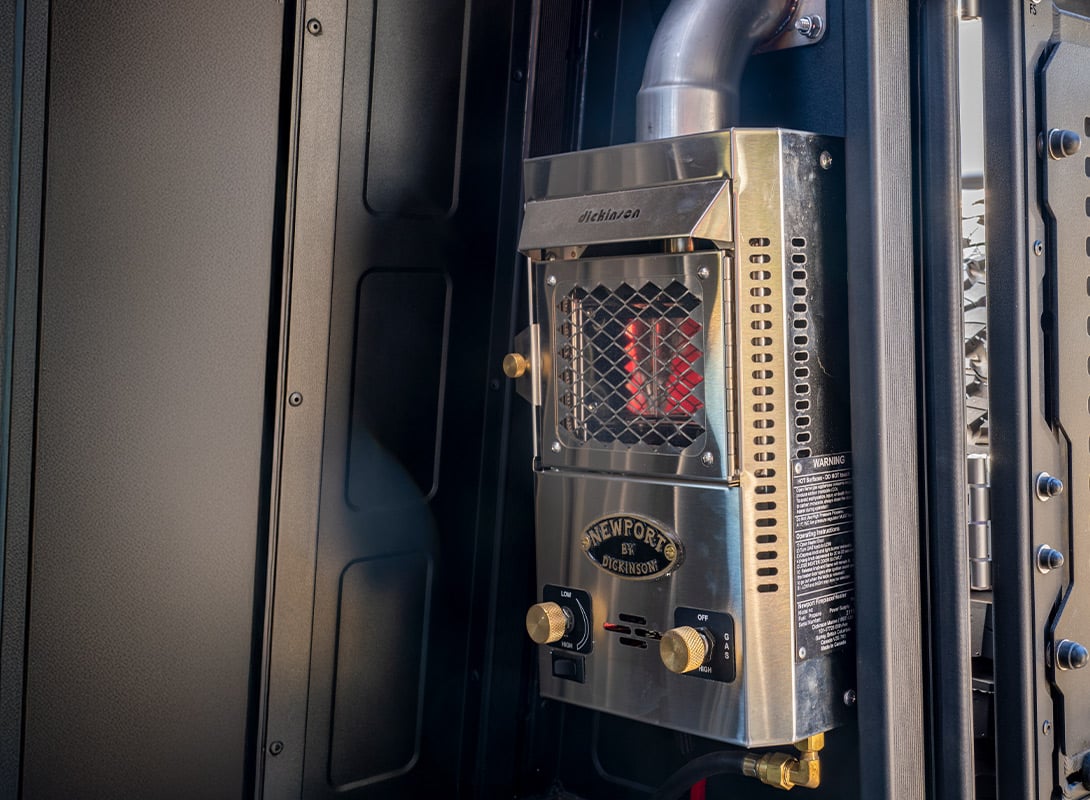
Models like the Dickinson Newport add timeless character while offering dependable performance in any climate. Installation does require careful planning for venting, heat shielding, and clearances. But once installed, these heaters can provide years of reliable warmth with minimal maintenance.
Safety First: Using Space Heaters on Boats
Safety is paramount when adding any heat source aboard. Improper equipment can quickly lead to fire or carbon monoxide hazards. Always choose a marine-rated heater with overheat protection, automatic shutoff features, and proper ventilation designed for confined spaces.
Never use household heaters that are not intended for marine environments because they lack the durability and safety features necessary for life onboard. The vibration, humidity, and tight quarters on a boat can easily compromise non-marine units, making certified marine heaters the only safe choice for reliable winter warmth.
Avoid These Common Mistakes
- Never block vents, drape clothing near heaters, or run extension cords across wet decks.
- Ensure cords include drip loops and use properly rated outlets to prevent shorts or overloads.
Top Boat Heaters for Liveaboards (2025 Edition)
Choosing the right space heater depends on your vessel, cruising area, and power availability. Below are some of the most trusted marine heaters available in 2025/2026.
- Caframo True North Electric Heater – 120V AC, 1,500W. Best for dockside power.
- Caframo Pali Engine Compartment Heater – Automatic thermostat; prevents engine freezing.
- Webasto Airtop 2000 STC Diesel Heater – Compact, efficient, perfect for sailboats.
- Dickinson Newport Solid Fuel Heater – Classic look, great for long-term cruisers.
DIY Tips: Insulation, Ventilation, and Moisture Control
Heating is only half the battle against condensation, mildew, and corrosion. Proper insulation and airflow are also important for keeping your cabin warm, dry, and efficient through the winter. Without them, even the best heater will struggle against drafts, moisture, and cold spots that drain both comfort and power.
Defender’s Moisture Control Solutions include systems for every cabin size, helping you keep humidity under control.
- Installing foam or reflective insulation behind panels, lockers, and hatches will retain warmth and reduce condensation on cold fiberglass or metal surfaces.
- Vent fans and dehumidifiers promote steady airflow and prevent mildew from forming in closed spaces.
- Sealing gaps around ports and doors will also improve temperature stability and energy efficiency.
Regional Advice for Winter Boaters
Winter boating varies dramatically by region. A heater that’s perfect for the Northeast may not suit a Florida marina or a liveaboard moorage in the Pacific Northwest. Below are regional best practices for staying warm and dry wherever you cruise.
Northeast / Great Lakes: Storage + Heater Use for Winter Projects
In these cold northern climates, electric heaters are the go-to choice for dockside winter projects and liveaboard comfort during layup season. Pairing a heater with a reliable dehumidifier helps manage condensation and prevents moisture damage during long, cold stretches aboard.
Always use a grounded, marine-rated cord designed for high-amperage loads to ensure safe operation. And before running your heater for the season, inspect your shore power system for corrosion or loose connections to avoid electrical hazards and maintain consistent performance.
Florida: Cool-Weather Comfort Aboard
Florida’s winter nights may be mild, but persistent humidity can still make cabins feel damp and uncomfortable. A small portable electric heater paired with a quality dehumidifier helps balance temperature and moisture, keeping the interior fresh and mildew-free.
Even when the air feels warm, proper ventilation remains essential to avoid trapped humidity. Keep airflow open and run a cabin fan to circulate warm, dry air through your berth and galley, ensuring consistent comfort during cooler evenings on the water.
Pacific Northwest: Humidity and Moisture Control Focus
In the Pacific Northwest, moisture is the constant battle for every liveaboard boater. The region’s cool, damp climate makes vented diesel or solid-fuel heaters the best choice for producing dry heat and reducing cabin condensation.
To maintain a healthy onboard environment, pair your heating system with desiccant dehumidifiers or vented cabin fans for consistent airflow. This combination helps prevent mold buildup, keeps surfaces dry, and protects your boat’s interior during long periods of moorage in wet conditions.
Marine Space Heater FAQs
Key safety and performance considerations should guide every aspect of heater selection and use aboard. Proper installation, operation, and maintenance are essential to ensure reliable performance and prevent onboard hazards during the winter season. And the following FAQs address key safety and performance considerations when using space heaters aboard.
Yes, you can use a space heater on a fiberglass boat as long as it is marine-rated and equipped with tip-over and overheat protection. Always place the heater on a stable, nonflammable surface and ensure adequate ventilation to prevent overheating and moisture buildup.
The safest heaters for sleeping aboard are sealed-combustion diesel or solid-fuel models that vent exhaust outside the cabin. These systems provide consistent, dry heat while eliminating the risk of carbon monoxide buildup inside enclosed spaces.
Yes, you can run a heater from shore power if your electrical system is properly rated and in good condition. Always use marine-grade cords and outlets, ensure connections are dry and corrosion-free, and avoid overloading circuits to maintain safe, continuous operation.
Stay Warm, Stay Safe, Stay Afloat
Preparing your boat for winter is about more than just staying warm. It’s also about protecting your investment and ensuring onboard safety. The right marine space heater, paired with proper insulation and ventilation, helps maintain comfort while preventing moisture damage throughout the cold season.
Whether you live aboard full-time or visit your boat during off-season maintenance, reliable heat makes all the difference. Explore Defender’s full range of marine heaters and winterizing supplies to keep your vessel warm, dry, and ready for launch when spring returns.