 Shopping from Canada?
  Go to Defender Canada!



Guide to Inflatable Boats: Types, Materials, Setup, and Buying Advice
Today’s inflatable boats and RIBs are tough, capable, and purpose-built for real boating. They’re a smart option for a tender, a travel boat, or a compact way to get on the water without the hassle of a full-size hull. But not all inflatables are built the same, and the differences matter.
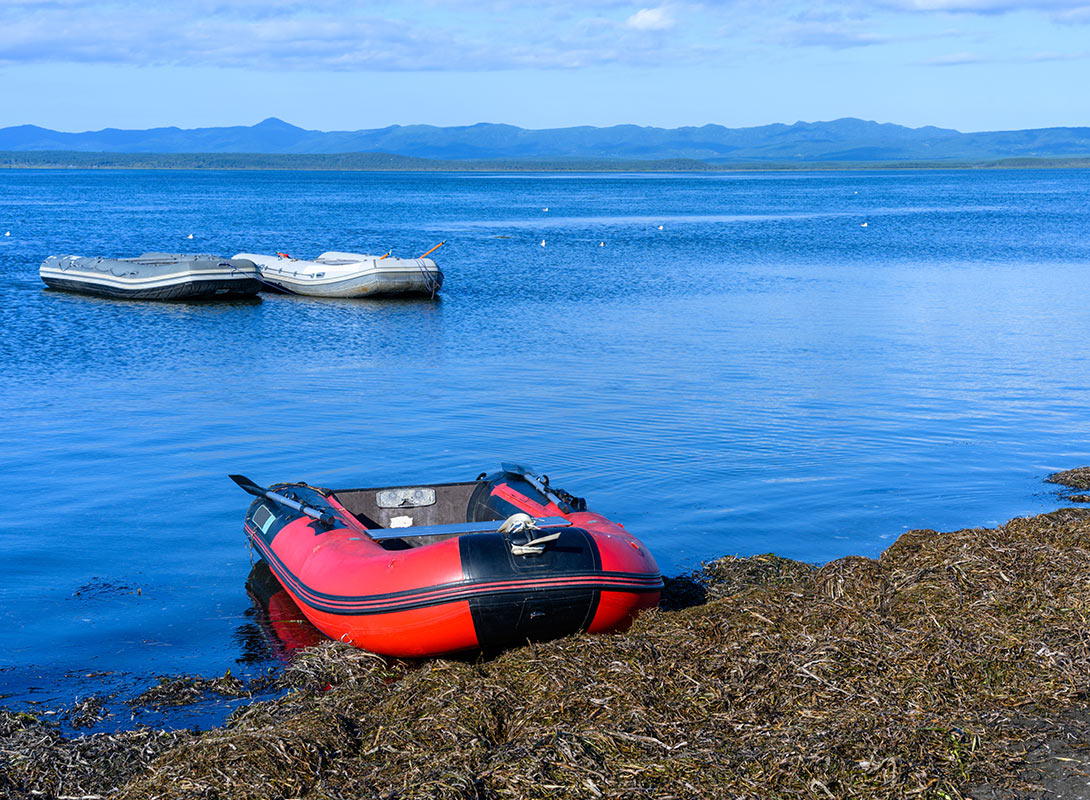
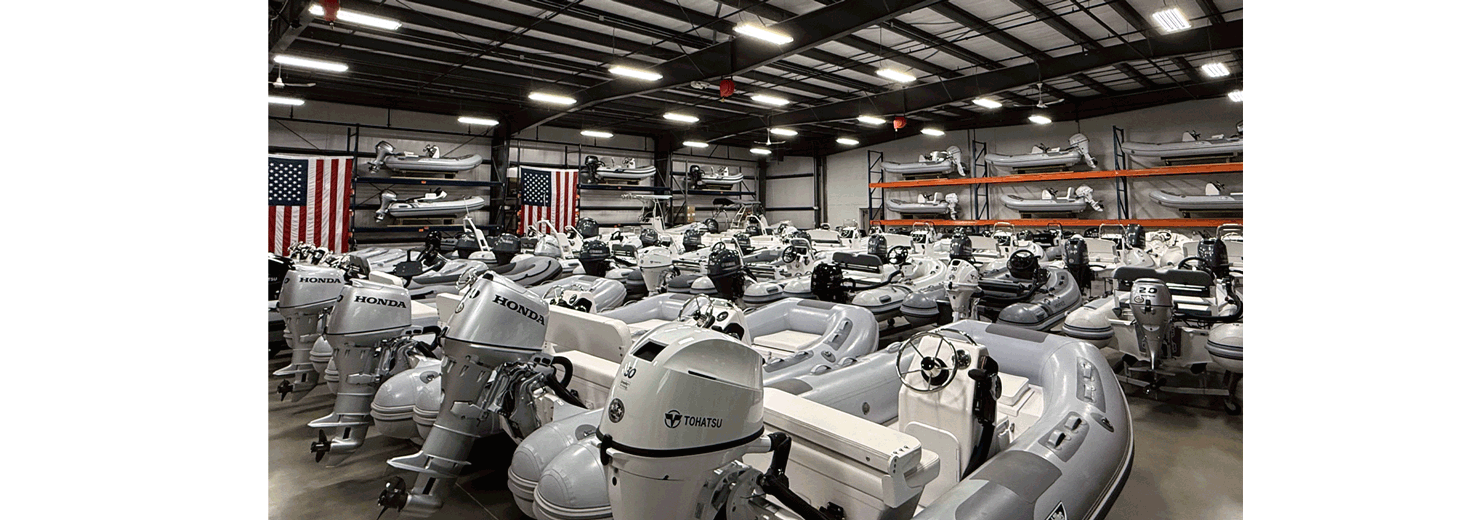
| Inflatable Boat Type Comparison | ||
| Feature | Soft-Bottom Inflatable | RIB Inflatable |
| Best use | Calm water, quick tender runs, travel/portable use | Regular tender duty, rougher water, heavier loads |
| Portability & storage | High; can roll up and stow small | Low; rigid hull needs space, davits, or a trailer |
| Ride & handling | Less precise; more affected by chop and load | Tracks and planes better; more control in chop |
| Power & motor weight | Lower limits; sensitive to heavy outboards | Higher limits; handles heavier outboards better |
| Setup time | Inflate + assemble floor | Minimal; hull is rigid, inflate tubes and go |
| Typical cost | Lower | Higher |
| If This Sounds Like You… | Choose This |
| The boat will be stored indoors, bagged, or out of the sun between trips | PVC |
| The boat will live on deck, at a dock, or outside for long stretches | Hypalon / CSM |
| Boating is mostly in cooler climates with a short season | PVC |
| Boating is in hot, high-UV areas (Florida/Gulf Coast) | Hypalon / CSM |
| Prioritizing lower cost and lighter weight | PVC |
| Prioritizing long service life and easier long-term ownership | Hypalon / CSM |
| Size Consideration | What to Know |
| Passenger capacity | Rated capacity assumes ideal conditions; real-world use often means fewer people once fuel, gear, and water are added |
| Weight limits | Staying under the maximum load improves handling, planing, and tube longevity |
| Transport & storage | Larger boats offer more room but demand more space, heavier motors, and more effort to move and store |
| Accessory | Why It Matters |
| Pumps (manual & electric) | Proper inflation affects performance, tube life, and safety |
| Oars | Essential backup when power fails or docking gets tight |
| Repair kits | Small leaks happen, and quick fixes prevent bigger problems |
| Covers | Protect tubes from UV, dirt, and abrasion during storage |
| Wheels & davits | Make launching, retrieval, and tender handling manageable |
| Safety gear | Required equipment that also buys time when things go wrong |
Inflatable Boats
Browse Defender’s full selection of inflatable boats and RIBs, with options for tenders, travel boats, and utility use across a wide range of sizes and materials.
How to Change an Outboard Motor Propellor
Learn how to change an outboard motor propeller step by step, from removal to install, including tips for performance upgrades and winterization.
Boat Safety Guide
Covers required and recommended safety gear, along with best practices that apply to inflatables just as much as larger boats.