 Shopping from Canada?
  Go to Defender Canada!



Guide to Choosing a VHF Fixed-Mount Radio for Boating
A VHF fixed-mount radio is the most dependable way to communicate on the water. This guide breaks down safety features, antennas, installation basics, and how to choose the right radio so your system performs when it matters most.
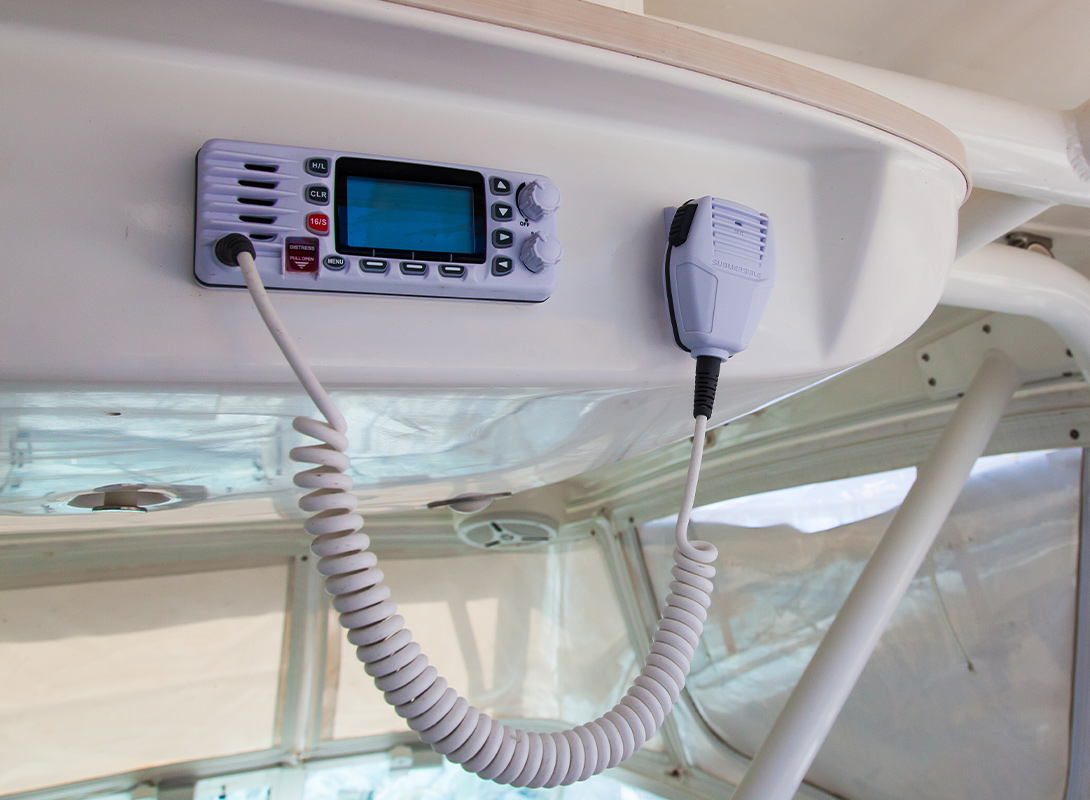
A VHF fixed-mount radio remains the most dependable way to call for help and communicate boat-to-boat. Its real-world reliability depends not just on the radio itself, but on features like DSC, GPS, AIS, and onboard networking.
Your choice of VHF antenna and proper installation directly affect both the range and clarity of transmissions. And together, these factors determine which VHF radio is right for your boat and whether it will perform when it matters most.
Why Every Boat Needs a Fixed-Mount VHF Radio
A fixed-mount VHF radio is your primary lifeline on the water, because it gives you dependable, real-time communication when phones do not. It is hardwired into the boat’s power system and paired with a proper antenna, so it can transmit farther, monitor Channel 16 continuously, and reach help fast. That safety role makes a fixed-mount radio the backbone of VHF marine communication when phones don’t work.

Safety, Reliability & Legal Requirements
When things go sideways, a VHF is how you call for help fast and get heard by nearby boats and rescue services monitoring Channel 16. Because it’s tied into your boat’s power, a fixed-mount radio can stay on and keep Channel 16 monitored 24/7, and it usually hits harder than a handheld. As a result, you get a safer, more consistent communication setup for day trips, night runs, and ugly weather.
That’s also where DSC comes in, because it lets you send a digital distress alert with your boat’s identity and, when connected to GPS, your position. To use DSC properly, you’ll register for an MMSI number and program it into the radio so the distress button sends the right info to the right people.
Requirements can vary by region and how far offshore you go, but the practical takeaway is the same: a fixed-mount VHF is core safety gear, not a nice-to-have.
Fixed-Mount vs. Handheld Radios
Handheld VHFs are convenient, especially for docking, troubleshooting from the bow, or keeping a radio on your person in a worst-case scenario (a backup that stays ready when you step away from the console). However, they’re limited by battery life and a short antenna that usually sits low to the water, which hurts range when you need it most.
A fixed-mount unit, on the other hand, runs off the boat’s power and pairs with an external antenna mounted higher, so your signal generally goes farther and stays clearer. In other words, it’s your primary at the helm for routine calls, weather monitoring, and emergency marine communication.
| Feature | Fixed Mount VHF | Handheld VHF |
| Best use | Primary helm radio for everyday calls and emergencies | Backup radio and on-deck communication |
| Power source | Boat’s 12V system | Internal battery (limited runtime) |
| Transmit power | Typically higher | Typically lower |
| Range | Better, mainly due to a higher external antenna | Shorter, mainly due to low antenna height |
| Audio | Stronger speaker, easier to hear in wind or engine noise | More limited volume on many models |
| Antenna | External antenna, mounted high | Short built-in antenna, held low |
| DSC distress | Common, often with better GPS or network integration | Available on some models, varies by unit |
| Install required | Yes (mounting, wiring, antenna, coax) | No (charge it and go) |
| Portability | Stays at the helm (or remote mic locations) | Portable, including use in a ditch bag |
| Best “belt and suspenders” setup | Use as your primary radio | Carry as your backup radio |
Key Features to Look For in a VHF Fixed-Mount Radio
Most fixed-mount VHFs will technically work, but the right one performs better when visibility drops, traffic increases, or you need help fast. That’s why it’s important to focus on features that truly affect safety and daily use, including DSC, GPS integration, AIS options, networking, and ease of operation in wet, noisy conditions.
Even within the same price range, small differences can matter when it counts, such as quick access to Channel 16, clear reception of weak signals, or reliable GPS data feeding DSC. The best features are only effective when they match your helm layout and boating style, which is why DSC is the right place to start—it’s the core safety feature that turns a basic radio into a true distress tool.
DSC (Digital Selective Calling): What You Actually Need
A DSC VHF radio is a critical safety tool because it can send a digital distress alert instantly when time matters most. For most boaters, [Class D DSC](https://www.navcen.uscg.gov/dsc-calling-classes#Class D) is the standard to look for, covering the core distress and calling features you’ll actually use (though some models may list Class E depending on certification and region).
The red distress button triggers an automatic digital alert that sounds alarms on receiving stations, but it should always be followed by a clear voice Mayday call. Because DSC relies on GPS data to transmit your position, choose a radio with internal GPS or a solid connection to an external GPS or chartplotter—and treat that wiring as essential safety gear, not an afterthought.
AIS Integration: Do You Need It?
An Automatic Identification System (AIS) helps you identify and track nearby vessel traffic before it turns into a close-quarters issue. It’s especially valuable in fog, at night, or in busy shipping lanes, showing key details like a vessel’s name, position, course, and speed.
AIS isn’t required for every boat, so the right setup depends on where and how you run. Receive-only AIS lets you see other vessels, while a transceiver also broadcasts your position. And many boaters choose to display AIS on the chartplotter to save helm space while keeping the VHF focused on clear communication when it counts.
NMEA2000 & Network Connectivity
A VHF radio becomes far more useful when it can share data with the rest of your helm instead of operating on its own. With NMEA 2000 (and in some cases NMEA 0183) the radio can pull GPS position for DSC and send key information back to your displays for smoother, more reliable operation.
In practice, this means connecting the radio to your chartplotter network using the correct backbone, drop cables, and connectors from brands like Garmin, Simrad, or Raymarine. Once integrated, GPS and AIS data can flow cleanly between devices, but it’s critical to confirm compatibility ahead of time so the network actually works when you need it.
Weather Alerts & NOAA Channels
Weather can change quickly on the water, and a VHF radio can deliver alerts even when cell service drops out. NOAA weather channels and WX alerts help you monitor forecasts, catch storm warnings, and make informed decisions before conditions turn unsafe.
These alerts are especially important in regions where weather shifts fast, such as the Great Lakes or the Northeast during storm season. They’re also valuable for anglers and cruisers who run early, stay out late, or travel farther from the ramp, making weather alerts a simple setup step that can pay off quickly.
Audio & Usability
On a real boat, you’re dealing with wind, engines, spray, and constant background noise, so a VHF has to be easy to operate and easy to hear. Look for large knobs and buttons you can use with wet hands and a bright display you can read at a glance without digging through menus.
Audio quality matters just as much as controls, since a weak speaker or muddy mic can turn a simple call into a problem. Clear output, noise-canceling features, and support for remote mics or second stations make it easier to communicate from the cockpit, flybridge, or nav station without shouting across the boat.
Durability & Waterproof Ratings
A marine VHF operates in a harsh environment, so it has to stand up to spray, salt, and the occasional full soak. That’s why waterproof ratings matter, since “water-resistant” isn’t the same as surviving real exposure at the helm.
IPX7 ratings indicate the radio can handle temporary immersion, while IPX8 covers deeper or longer submersion based on the manufacturer’s specs. Even so, proper installation still matters, and if your radio lives on an open console or wet flybridge, choosing better sealing is smart insurance.
Choosing the Right VHF Antenna (Half the Battle)
You can buy the best fixed-mount VHF on the shelf, but if the antenna setup is weak, your range and clarity will be weak too. Antenna height, gain, build quality, and the coax and connectors you run all decide how well your signal gets out and how well you hear others coming back.
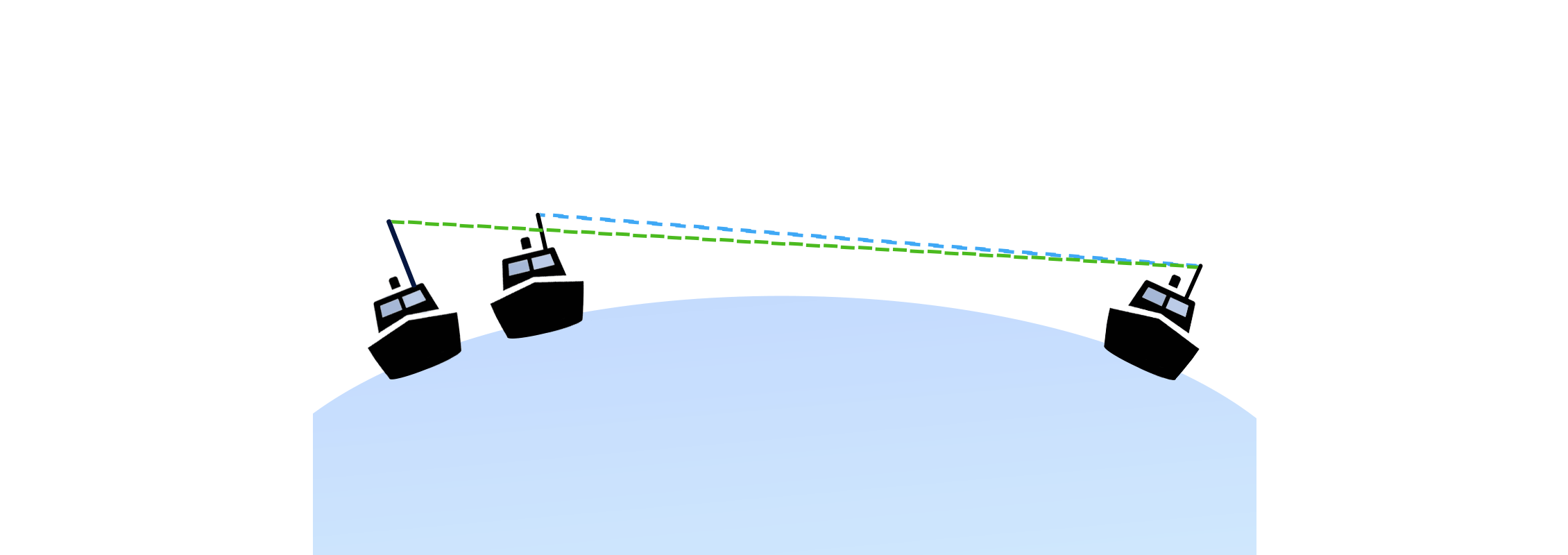
Antenna Height = Range (Real-World Explanation)
VHF is mostly line-of-sight, so the higher your antenna sits, the farther your signal can travel before the curve of the earth and shoreline clutter start cutting it off. That’s why a well-mounted antenna on a hardtop, mast, or arch usually outperforms a low console mount, even if the radios are identical.
However, height only helps if the antenna is mounted clean and stays vertical, because bad angles and sloppy brackets can waste range. Gain ratings are the next factor to consider, because the right dB choice is the other big lever that shapes real-world VHF performance.
Gain Ratings: 3dB vs 6dB vs 9dB
Antenna gain is about how the signal is shaped, and higher gain generally flattens the pattern to push more energy out toward the horizon. As a result, 6dB is a common all-around pick, while 3dB is more forgiving when the boat pitches and rolls, and 9dB can help on flatter water but may be less useful in heavy motion.
That's why 3dB is often the better fit on sailboats, where heel and mast motion can tilt the antenna and you still want consistent coverage. On many powerboats, on the other hand, a steadier ride and higher mounting points make 6dB a strong default, with 9dB reserved for setups that stay fairly level and run in open water.
Antenna Construction & Mounts
A VHF antenna doesn’t just sit there, it takes constant sun, salt, vibration, and the occasional knock from a cover or a dock line. That’s why build quality matters, and why you’ll see common choices like fiberglass whips with stainless ferrules that hold up better over time.
Antenna mounts matter just as much, because a loose bracket or a flimsy ratchet mount can tilt the antenna, stress the cable, and kill performance. And coax cable and connectors are the next crucial pieces of the puzzle, since even a great antenna can’t do its job if the feed line is the weak link.
Coax Cable & Connectors
Your VHF radio is only as good as the coaxial cable carrying its signal, so the feed line should never be an afterthought. Higher-quality, thicker coax reduces signal loss, helping more transmit power reach the antenna and making weak incoming calls easier to hear.
On smaller boats with short runs, RG-8X is often a practical, flexible option that’s easy to route through tight spaces. For longer runs or masthead installs, lower-loss coax like RG-213 is worth considering, and properly installed, well-sealed PL-259 connectors are critical to keeping water out and performance up.
Interference & Coax Routing Best Practices
Coax is picky, so route it like you actually care about range and clarity. Keep it away from high-current power runs, ignition wiring, inverters, and other noisy electronics that can bleed interference into your radio.
Next, avoid sharp bends, kinks, and crushing the cable behind the helm, because damaged coax adds loss and creates weak points that fail when the boat starts pounding. Leave clean service loops, support long runs, and protect any pass-throughs with grommets so the jacket doesn’t get chewed up over time.
Finally, treat every connection as if it will see salt spray, because eventually it will. Use quality connectors, seal exterior joints, and follow Defender’s Wiring Tips Guide for clean routing, proper terminations, and corrosion-resistant installs that hold up season after season.
Installation Basics: What Most Boaters Get Wrong
A VHF install isn’t complicated, but the small mistakes are the ones that kill performance when you need the radio most. The big three are sloppy mounting, weak power and fusing, and bad antenna routing, and they all show up later as poor range, noisy audio, or DSC that won’t send position. A solid VHF installation process focuses on these potential failure points, because fixing them upfront is the difference between a radio that “works” and one that can be trusted underway.
Bracket vs. Flush Mount Installs
A bracket mount is the straightforward option, because it gives you more flexibility on placement and usually makes wiring and service easier later. It also works well on smaller helms where you want the radio angled toward the operator and you don’t want to cut a big hole in the dash. If you’re unsure, start here, since a clean bracket install beats a sloppy flush mount every time.
A flush mount gives a cleaner, built-in look, but it demands careful measuring, clean cutouts, and enough clearance behind the panel for the radio body and cabling. Just as important, many radios require a separate flush-mount kit, so don’t assume it’s included in the box. Before you commit, confirm the template, the kit availability, and the depth behind the helm, because fixing a bad cutout is no fun.
Proper Power Supply & Circuit Protection
A VHF draws enough current that it needs solid power, not a skinny shared feed spliced into whatever was handy behind the dash. Voltage drop and weak connections can cause low transmit power, distorted audio, or radios that reboot when you key the mic. Start with the basics: clean wiring, tight terminals, and the right wire gauge for the run.
Then protect the circuit correctly, remembering that the fuse is there to protect the wiring, not the radio. Use the manufacturer’s specified fuse (or the value listed in the manual), and place it as close to the power source as practical so the whole run is protected. For best results, run the radio on a dedicated circuit from your panel or fuse block, and if you need parts, tie this section to Defender’s Electrical category so boaters can grab wire, fuses, holders, and terminals in one shot.
Antenna Placement & Separation
A VHF antenna works best when it’s high, vertical, and as clear of obstructions as you can realistically make it. In practice, that means getting it above people, canvas, and metal structures that can block or reflect signal and mess with performance.
The goal is simple: a clean shot to the horizon so your range is limited by physics, not poor placement.
Separation matters too, because antennas and electronics can interfere with each other when they’re stacked too close. Keep your VHF antenna spaced away from other antennas and high-power gear, and avoid running coax alongside noisy power cables where possible. And if you’re building out a full electronics stack, plan the antenna layout first, since moving it later is always harder than doing it right up front.
MMSI Registration & DSC Activation
DSC only works the way it’s supposed to when your radio has an MMSI number programmed into it. An MMSI is your boat’s digital ID, and it’s what lets the distress button send a message that identifies you and points responders in the right direction. Without it, you still have a VHF, but you’re leaving a key safety feature sitting on the bench.
Once you have the MMSI, take your time entering it, because many radios lock that number after it’s set. Then connect the radio to a GPS source or confirm its internal GPS has a clear view of the sky, since DSC needs position data to be fully effective. After that, run a quick check of DSC calling features and settings, so you’re not learning the menu when you’re already in trouble.
Testing Your System Before Leaving the Dock
Don’t wait for an emergency to find out your mic is dead, your antenna is loose, or your radio reboots when you transmit. Start with a basic function check: power on, volume and squelch, channel changes, and a clean transmission on the correct working channel with a buddy boat or a marina contact if appropriate. If audio is weak or distorted, fix it now, because it won’t get better offshore.
Next, verify the safety pieces, because that’s the whole point of installing the system in the first place. Confirm the radio is receiving GPS position, the MMSI is programmed correctly, and the DSC functions are ready, in case you ever need to press that red button. Finally, do a quick visual on the coax and connectors, since a loose PL-259 or water intrusion will quietly wreck performance long before it fails completely.
Best VHF Radios for Different Types of Boaters
The best VHF fixed-mount radio isn’t “one-size-fits-all,” because the right pick depends on how you boat, where you run, and how hard your setup gets used. Once you know which features matter for your style of boating, you can narrow down to radios that fit your helm, your budget, and your safety needs without paying for fluff. From there, the smartest way to choose is to match radios to boater type, since different boats and trips demand different strengths.
For Recreational Cruisers & Family Boaters
For day trips, harbor hops, and family cruising, you want a radio that’s simple, loud, and ready for real safety work without a steep learning curve. Start with a DSC-capable fixed-mount unit, since that’s the baseline feature that makes the radio more than just boat-to-boat chatter. Then prioritize an easy interface, a strong speaker, and big controls.
Budget-friendly doesn’t mean barebones, so focus on the essentials and skip the add-ons you won’t use. A radio with dependable DSC, a clean GPS tie-in (or internal GPS), and solid weather channels covers most family boating needs. From there, you can shop Defender’s fixed-mount VHF category and look for DSC-ready models that match your helm space and price point.
For Offshore Anglers
Offshore anglers need communication that holds up when they’re running early, running far, and dealing with weather and traffic that can change fast. Start with strong audio, a durable build, and reliable DSC, because a weak speaker or flaky power connection turns into a real problem when conditions get loud and ugly. Then, if you fish around commercial traffic or run in fog or darkness, consider AIS integration, since seeing targets and tracking movement can help you make safer decisions before things get tight.
A second-station mic can be a game-changer on bigger boats, because it lets you work the radio from the cockpit or tower without yelling back to the helm. Rugged mounts and protected cabling matter too, since offshore boats live wet and vibrate hard, and the install has to survive it. The goal is simple: a radio you can hear, key up, and trust offshore, with the right add-ons to match how you fish and how far you run.
For Sailors & Long-Distance Cruisers
For sailors and long-distance cruisers, the VHF isn’t just for quick calls, it’s part of the boat’s safety and navigation system. That means DSC with reliable GPS data is non-negotiable, and an NMEA 2000 VHF radio is a big upgrade because it lets the radio share position, calling data, and, on AIS-capable setups, traffic information with your helm displays.
When you’re out longer and farther, clean networking matters, because it reduces single-point failures and keeps the whole system working as one.
Installation choices matter too, especially on sailboats where space is tight and gear takes a beating. A low-profile radio that fits cleanly at the nav station, plus a remote mic or second station in the cockpit, keeps communication where you actually sail the boat. And if you cruise shorthanded or run night watches, that convenience becomes a safety feature, not a luxury.
For Tenders & Secondary Stations
For tenders, small center consoles, and secondary stations, the priority is a radio that fits the space and still does the core job reliably. A compact fixed-mount unit with DSC capability gives you real communication without eating up the whole console. Keep the controls simple and the audio strong, because small boats are loud and you don’t have time to wrestle menus.
If this is a second station on a larger boat, think about how it ties into the main setup before you buy. A remote mic or a compact second radio can make sense depending on your layout, but either way you want consistent channel access and clear comms where you operate. And make sure to match it with the right antenna and clean wiring, because even a small radio will underperform if the install is sloppy.
VHF Radio Buying Checklist (Downloadable PDF)
Before you click “buy,” take two minutes to run this checklist, because the right radio on paper can turn into a headache if it doesn’t match your boat, your wiring, and your helm layout. This list keeps you focused on the few choices that actually affect marine radio range, safety, and day-to-day usability, instead of getting lost in marketing features. Download it, print it, and use it while you compare models and plan the install.
Frequently Asked Questions
Yes, because DSC is the core safety feature that lets your radio send a digital distress alert with your boat’s identity and, when connected to GPS, your position. If you’re buying a fixed-mount VHF today, DSC-capable should be your baseline, not an upgrade.
Class D vs Class E DSC mainly comes down to the radio service: Class D is the DSC standard used on VHF marine radios, while Class E is used on HF marine radios. If you’re choosing a fixed-mount VHF, you’re almost always shopping Class D.
Range is mostly line-of-sight, so antenna height usually matters more than the radio itself. A higher, properly mounted antenna with good coax will outperform a low antenna with poor wiring.
Not always. Many boaters do fine with VHF + DSC, but AIS is valuable if you run offshore, at night, in fog, or near commercial traffic.
Yes. Most DIY boaters can handle a fixed-mount VHF install by focusing on solid power, correct fusing, good coax routing, and a properly mounted antenna.
Higher is better. VHF performance is line-of-sight, so mount the antenna as high and as clear as practical without compromising stability or service access.
Start with a fixed-mount VHF for range and reliability, then add a handheld as a backup and for on-deck use.