 Shopping from Canada?
  Go to Defender Canada!



Fixed-Mount vs. Handheld GPS Units: Which Is Right for Your Boat?
Choosing the right marine GPS isn’t just about screen size or price. It’s also about how you boat, where you boat, and what you expect from your navigation setup. Fixed-mount and handheld GPS units both get you from point A to point B, but they solve very different problems on the water.
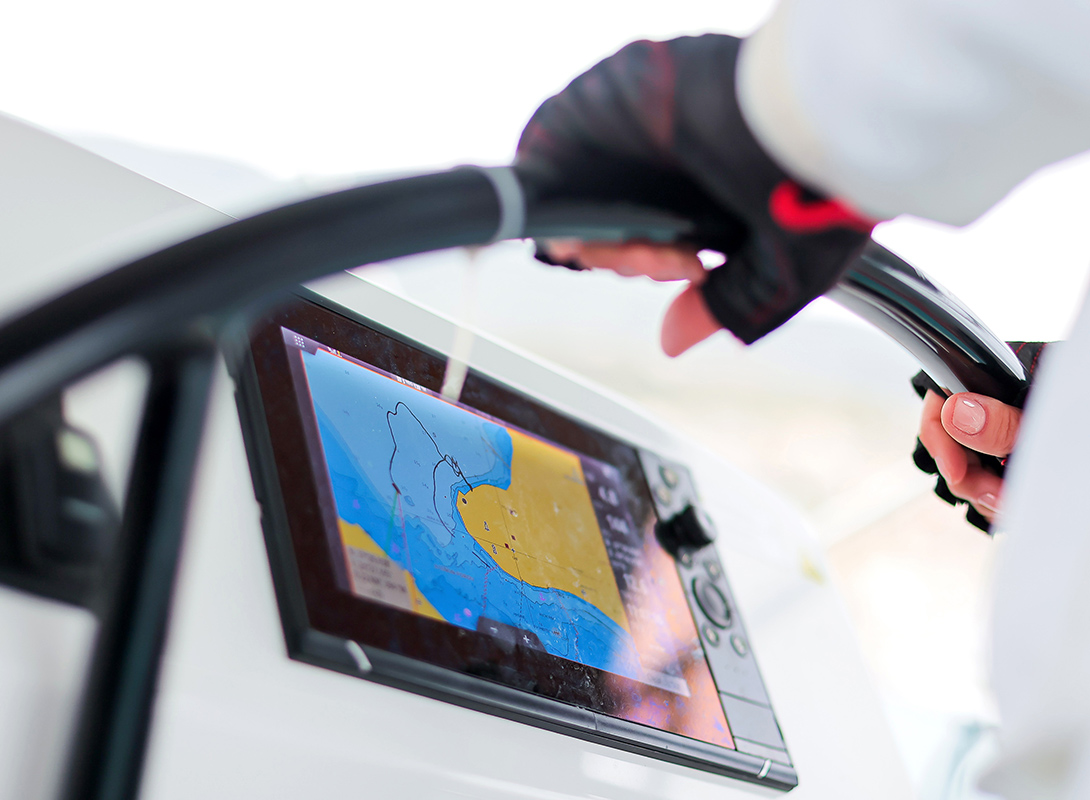
A fixed-mount GPS becomes part of your boat’s navigation system, offering constant power, larger displays, and integration with other electronics. A handheld GPS, on the other hand, trades integration for portability, giving you a flexible, battery-powered option you can use across multiple boats or keep as a backup.
Understanding the strengths and limitations of each helps you avoid overbuying, or worse, under-equipping your boat. The right choice depends on your boating style, your waters, and how much reliability and redundancy you want when conditions change.
Why Your Navigation Setup Matters
Your GPS setup plays a direct role in how safely and confidently you operate your boat. The right system improves situational awareness, reduces workload at the helm, and gives you reliable information when conditions change. Choosing between fixed-mount and handheld GPS units shapes how prepared you are for routine navigation and unexpected problems alike.
Safety, Situational Awareness, and Redundancy
A reliable GPS helps you maintain awareness of your position, course, speed, and nearby hazards at all times. When visibility drops or weather turns, clear navigation data becomes a critical safety tool rather than a convenience.
Redundancy matters just as much as capability. Many experienced boaters rely on more than one navigation source so a single power loss, screen failure, or wiring issue doesn’t leave them guessing when it counts.
How Different Boaters Use GPS Systems Differently
Not all boaters rely on GPS in the same way. A sailor planning long passages may prioritize integration and redundancy, while a freshwater angler may care more about portability and quick waypoint marking.
Boat size, range, and water type also influence what makes sense at the helm. Understanding how you actually boat helps narrow whether a fixed-mount system, a handheld unit, or a combination of both fits your needs best.
What Fixed and Handheld Units CAN’T Replace
Even the best GPS doesn’t replace radar, paper charts, or basic seamanship skills. GPS shows where you are, but it doesn’t always show what’s around you, what’s moving, or what’s about to change.
Smart navigation comes from layering tools and judgment together. GPS is a powerful aid, but safe boating still depends on planning ahead, reading conditions, and knowing how to navigate when electronics fall short.
What Is a Fixed-Mount Marine GPS?
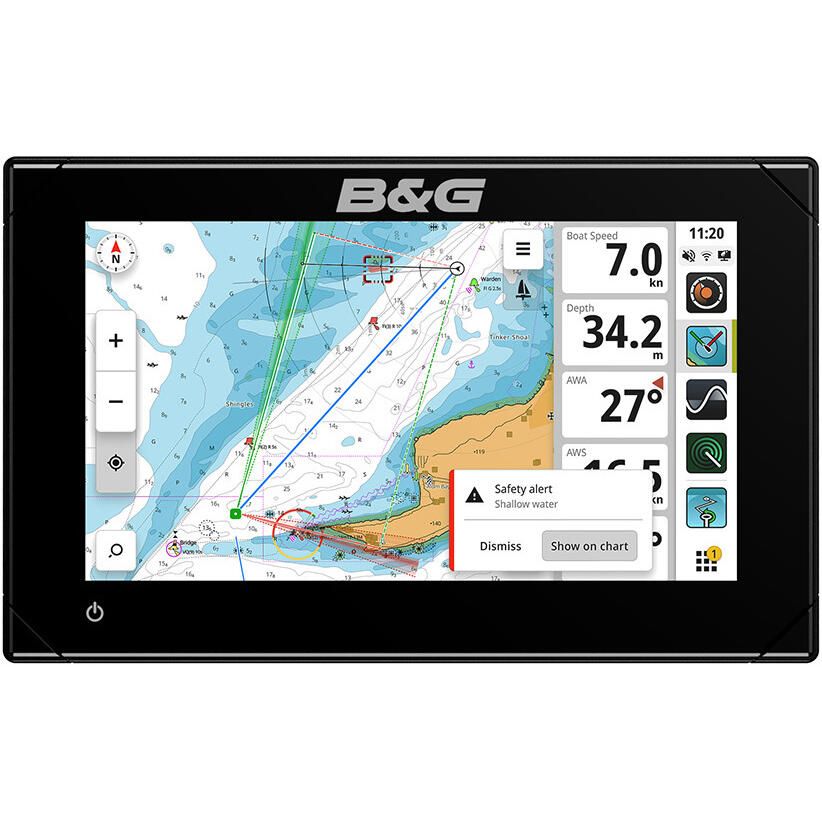
A fixed-mount marine GPS is a permanently installed navigation unit designed to live at the helm. These systems are built for constant use, larger displays, and integration with other onboard electronics. For many boaters, a fixed-mount GPS becomes the backbone of their navigation setup.
Core Features of Fixed Mount GPS
Fixed-mount GPS units typically offer larger, sunlight-readable screens that are easy to see from the helm. This makes route planning, waypoint tracking, and situational awareness faster and less fatiguing underway.
Most fixed units also support advanced charting features, including detailed vector charts and customizable data overlays. Many models function as chartplotters or full multifunction displays (MFDs), expanding well beyond basic GPS positioning.
Power & Installation of Fixed Mount GPS
Fixed-mount GPS units are hardwired into your boat’s electrical system, providing continuous power whenever the boat is running. This eliminates concerns about battery life during long days on the water or extended trips.
Installation requires mounting the unit, running power and data cables, and often routing wiring cleanly behind the helm. While more involved than a handheld setup, a proper install delivers long-term reliability and a cleaner helm layout.
Integration of Handheld GPS
One of the biggest advantages of a fixed-mount GPS is its ability to integrate with other marine electronics. Through NMEA 2000 or Ethernet networks, these units can share data with radar, AIS, autopilots, and sonar systems.
This integration creates a centralized navigation hub at the helm. Instead of juggling separate screens, you can view targets, charts, depth, and navigation data in one place.
Pros of Fixed Mount GPS
Fixed-mount GPS units offer superior visibility and usability, especially in bright sunlight or rough conditions. Larger screens and dedicated controls make them easier to operate quickly and accurately at speed.
They also provide unmatched system integration and expandability. As your boating needs grow, a fixed-mount GPS can grow with your boat by adding sensors, displays, and networked equipment.
Cons of Fixed Mount GPS
The biggest drawback of a fixed-mount GPS is the commitment it requires. Installation takes time, planning, and sometimes professional help, especially on boats with limited helm space.
Fixed units are also less flexible than handhelds. Once installed, they stay on the boat, which means they can’t double as a portable backup or be easily moved between vessels.
What Is a Handheld Marine GPS?
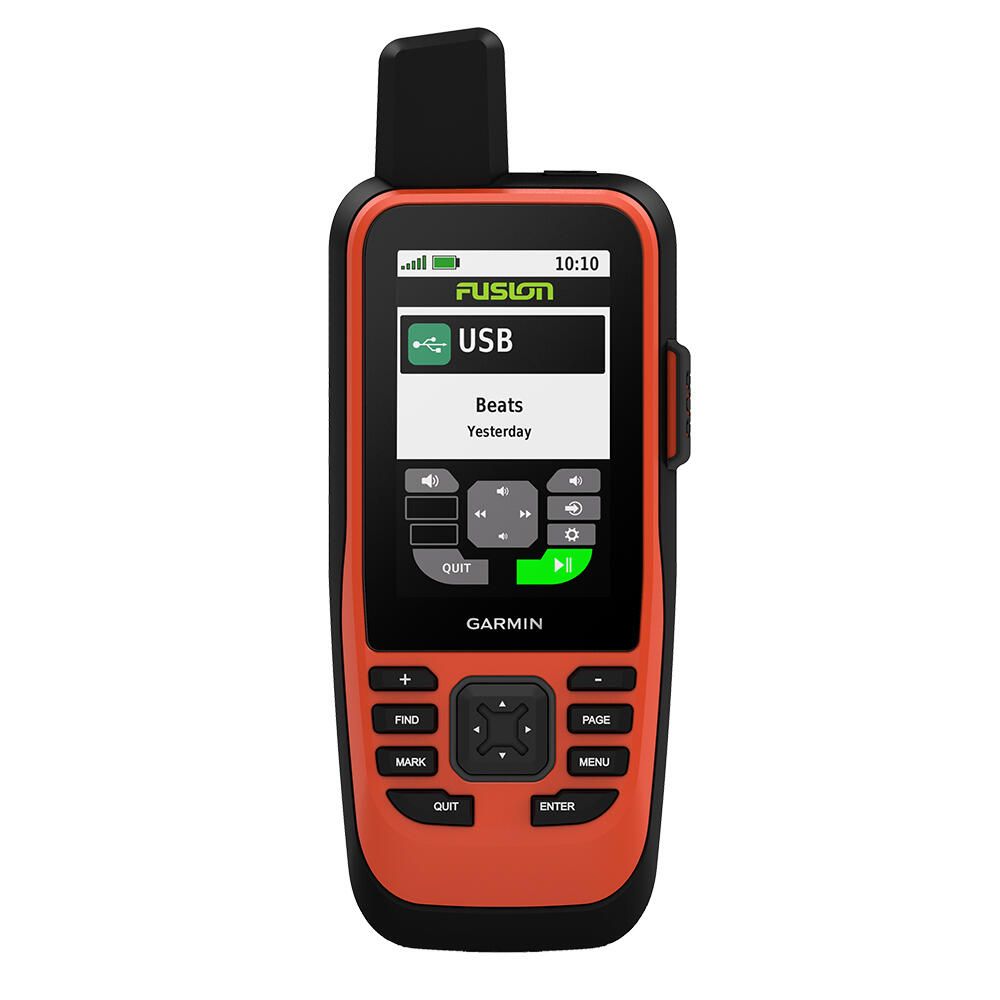
A handheld marine GPS is a portable, self-contained navigation device designed to work anywhere you take it. These units run on internal batteries, don’t require installation, and are built to handle wet, rough environments. For many boaters, a handheld GPS fills the role of a flexible primary navigator or a critical backup.
Core Features of Handheld GPS
Handheld GPS units provide essential navigation data like position, speed, heading, and waypoint tracking in a compact form. Most models support basic charting and route planning, making them effective tools for coastal, inland, and nearshore navigation.
While screens are smaller than fixed-mount units, handhelds are designed for close-up viewing and quick checks. Physical buttons or simple interfaces make them easy to operate with wet hands or gloves.
Battery Life, Portability, and Waterproofing
Handheld GPS units run on replaceable batteries or rechargeable internal packs, giving you independence from the boat’s electrical system. Battery life varies by model, but many units are designed to last a full day or more on a single charge.
Portability is a major advantage, allowing you to move the unit between boats, tenders, kayaks, or even on land. Most handheld marine GPS units are waterproof to IPX7 standards and built to survive splashes, rain, and accidental drops.
Use Cases
Handheld GPS units excel in small-boat and secondary navigation roles. They’re commonly used for dinghy navigation, kayak fishing, or as a grab-and-go backup on larger boats.
Many boaters also rely on handhelds during offshore runs as a redundancy tool in case of power loss or electronics failure. Off the water, the same unit can double for hiking, trail navigation, or exploring remote areas.
Pros of Handheld GPS
The biggest strength of a handheld GPS is flexibility. You can carry it anywhere, use it on multiple boats, and keep it ready even when the main system is shut down.
Handheld units are also simple to deploy. There’s no installation required, which makes them an easy and affordable way to add navigation capability or redundancy.
Cons of Handheld GPS
Smaller screens can limit how much information you see at once, especially in bright sunlight or rough conditions. For long hours at the helm, handhelds can be less comfortable to rely on as a primary display.
Handheld GPS units also offer limited integration. Most operate as standalone devices and don’t connect into larger navigation networks or helm-mounted systems.
Head-to-Head Comparison: Fixed-Mount vs Handheld
Fixed-mount and handheld GPS units often overlap in basic navigation functions, but they perform very differently in real-world use. The differences become clear when you compare how they handle visibility, power, durability, and system integration. Laying these features side by side makes it easier to see which setup fits your boat and boating style.
Below is a direct comparison to highlight where each type excels and where tradeoffs exist. This kind of head-to-head view helps narrow your options before diving into specific models.
Accuracy & Screen Visibility
Fixed-mount GPS units benefit from larger, high-resolution screens designed for constant helm viewing. These displays are typically sunlight-readable and refresh quickly, making them easier to interpret at speed or in rough conditions.
Handheld GPS units, on the other hand, use smaller screens optimized for close-up viewing. To preserve battery life, some models limit brightness or refresh rates, which can affect visibility in bright sun.
Power & Endurance
Fixed-mount GPS units draw power directly from the boat’s electrical system. As long as the boat has power, the GPS can run continuously without concern for runtime.
Handheld GPS units rely on internal batteries or replaceable cells. While runtime is limited, this independence gives them value as a backup if the boat’s electrical system fails.
Durability & Weather Resistance
Both fixed-mount and handheld marine GPS units are built for harsh environments and commonly meet IPX7 or higher waterproof standards. Fixed units, however, are designed to withstand constant exposure at the helm.
Handheld GPS units are often tested for drops and rough handling in addition to water resistance. Their compact design and rugged housings make them well suited for mobile and off-boat use.
Chart Detail & Map Capability
Fixed-mount GPS units typically support full-featured vector charts with optional premium layers for depth shading, satellite imagery, and fishing data. Larger screens make it easier to interpret complex chart information at a glance.
Handheld GPS units usually offer simplified charting focused on core navigation. While less detailed, these maps are often more than adequate for inland waters, lakes, and nearshore use.
Integration & Networking
Fixed-mount GPS units are designed to integrate with other onboard electronics. Through NMEA 2000 or Ethernet networks, they can share data with AIS, radar, sonar, and autopilot systems.
Handheld GPS units generally operate as standalone devices. Some models offer limited data sharing, but full network integration is uncommon.
Installation Requirements
Installing a fixed-mount GPS involves mounting the display, running power and data wiring, and sometimes cutting into the helm. Additional components like transducers or network backbones may also be required.
Handheld GPS units, on the other hand, require no installation at all. They’re ready to use straight out of the box, making them the simplest option from a setup standpoint.
Which GPS System Fits Your Boating Style?
The right GPS setup depends less on the device itself and more on how you use your boat. Distance, conditions, crew, and backup needs all factor into whether a fixed-mount, handheld, or combined approach makes the most sense. Looking at common boating scenarios helps clarify what actually works on the water.
GPS for Sailors / Cruisers
Sailors and cruisers rely on GPS for more than basic positioning, especially on longer passages. Integration with charts, AIS, and autopilot systems makes navigation easier and reduces workload over time.
Redundancy is just as important offshore. A fixed-mount GPS at the helm paired with a handheld backup provides both full-system capability and a self-powered safety net if onboard electronics go down.
GPS for Freshwater & Saltwater Anglers
Anglers need GPS units that respond quickly and mark waypoints accurately. Fast refresh rates and clear chart views help track structure, navigate channels, and return precisely to productive spots.
For tournament fishing or offshore runs, a fixed-mount GPS is usually the primary tool. Handheld units work well on smaller skiffs, kayaks, or as a portable backup when moving between boats.
GPS for Weekend Boaters / Family Boaters
Many weekend and family boaters prioritize simplicity and reliability over advanced features. Clear navigation, easy operation, and minimal setup often matter more than deep system integration.
On lakes and protected waters, a handheld GPS may be all that’s needed. For coastal day cruising, a fixed-mount GPS offers better visibility and convenience at the helm.
GPS for For Inflatable Dinghies & Tenders
Space and portability are the biggest constraints on inflatables and tenders. A compact GPS that doesn’t require wiring or permanent mounting is often the most practical solution.
Handheld GPS units fit these boats well. They’re easy to stow, simple to use, and can move seamlessly between a tender, the main boat, and onshore adventures.
Redundancy: Why Many Boaters Carry Both
Even the best navigation system can fail under the wrong conditions. Redundancy gives you a backup when power, wiring, or primary electronics let you down. That’s why many experienced boaters rely on both a fixed-mount GPS and a handheld unit.
Offshore Safety Case Study
Offshore, navigation failures rarely happen at convenient times. Loss of power, water intrusion, or a damaged display can quickly turn a manageable situation into a serious one. Having a secondary, self-powered GPS keeps you oriented and moving safely. In offshore conditions, redundancy isn’t just a luxury, it’s a safety strategy.
Power-Loss Scenarios
Electrical failures are one of the most common causes of navigation loss. A dead battery bank or failed breaker can take multiple helm systems offline at once. A handheld GPS bypasses those failures entirely. When the boat goes dark, a battery-powered unit keeps position, heading, and waypoints available.
Where Handheld Units Excel as Emergency Backups
Handheld GPS units shine in emergencies because they’re independent and portable. You can grab one instantly and use it anywhere on the boat or in a life raft. When paired with emergency communications gear, a handheld GPS becomes even more valuable. Accurate position data supports distress calls and improves rescue response times.
Installation, Mounting & Power Considerations
Choosing the right GPS also means understanding what it takes to install and support it. Fixed-mount units require planning, while handhelds require almost none. Knowing these differences helps avoid surprises during installation or upgrades.
Tools Needed for DIY Installation
Installing a fixed-mount GPS typically requires basic hand tools, wire crimpers, and a drill. Clean cable routing and secure connections are just as important as the display itself. Most DIY boaters can handle installation with proper planning. Taking time to measure, label wires, and follow wiring diagrams pays off long term.
Choosing Mounts (Rail, Pedestal, Binnacle, RAM Mount)
Mounting options depend on helm layout and how you use the GPS. Fixed units may require flush mounting or brackets, while handhelds often use RAM or rail mounts. The goal is clear visibility and safe access underway. A solid mount prevents vibration, glare, and accidental movement in rough conditions.
Clean Wiring Best Practices
Good wiring protects both your electronics and your boat. Proper fusing, drip loops, and labeled connections reduce the risk of shorts or failures. Clean wiring also makes future upgrades easier. Organized cable runs help when adding radar, AIS, or additional displays later.
Power Draw Considerations
Fixed-mount GPS units draw continuous power from the boat’s electrical system. While usually modest, power draw matters on smaller boats or when running multiple electronics. Handheld units shift that load off the boat entirely. Understanding how each option affects your electrical system helps balance capability and endurance.
Pricing Breakdown: What to Expect
GPS pricing varies widely based on screen size, features, and integration capability. Understanding price tiers helps set realistic expectations before shopping. A smart approach focuses on long-term value, not just upfront cost.
Entry-Level Options
Entry-level handheld GPS units are often the most affordable way to add navigation capability. They cover basic positioning and routing without installation costs. These units work well for lakes, tenders, and backup use. For many boaters, they offer strong value at a low commitment.
Mid-Range
Mid-range options include larger handhelds and smaller fixed-mount chartplotters. These systems balance usability, features, and price for many recreational boaters. They’re often the sweet spot for coastal cruising and serious fishing. Buying quality here avoids the need for quick upgrades later.
High-Performance Offshore Systems
High-end fixed-mount GPS and MFD systems are built for offshore use and full integration. Larger displays, advanced charting, and networked electronics come at a higher cost. For offshore and long-range boating, reliability matters more than savings. This is where the mindset applies: buy once, rig it right.
Recommended GPS Products
Once you’ve decided which GPS setup fits your boating style, the next step is choosing the right category of gear. Fixed-mount and handheld GPS units each offer strong options depending on how you boat and where you navigate.
Shop Recommended GPS Products

FAQs: Fixed-Mount vs Handheld GPS Units
Yes, many boaters still carry a handheld GPS even with a fixed-mount system installed. A fixed-mount GPS depends on the boat’s electrical system, so a power loss or wiring issue can take it offline. A handheld unit provides a self-powered backup that keeps basic navigation available when you need it most.
Modern handheld GPS units are highly accurate and often use the same satellite systems as fixed-mount units. In terms of raw positioning accuracy, there’s little difference between the two. The main limitation offshore is screen size, endurance, and integration, not accuracy.
Handheld GPS units are best viewed as support tools offshore rather than primary navigation displays. Used alongside a fixed-mount system, they add valuable redundancy without sacrificing reliability.
Most handheld GPS units operate as standalone devices. They typically do not connect into NMEA 2000 networks or share data with radar, AIS, or autopilots. This limits their role in fully integrated helm setups.
Some handheld VHF/GPS combo units can share position data for distress calls or DSC features. However, full system integration is generally the domain of fixed-mount GPS and chartplotter systems.
Smartphone navigation apps can be useful, but they are not true replacements for a dedicated marine GPS. Phones are more vulnerable to water, glare, overheating, and battery drain in marine environments. They also rely heavily on touchscreens, which can be difficult to use in wet or rough conditions.
A handheld marine GPS is purpose-built for boating. It offers better durability, physical controls, and predictable performance when conditions are less than ideal.
The best chartplotter size depends on helm space, viewing distance, and how much information you want on screen at once. Smaller boats often work well with 5-7 inch displays, which balance visibility and space. Larger boats benefit from 9-12 inch or larger screens that make charts, targets, and overlays easier to interpret.
Bigger isn’t always better if it overwhelms your helm layout. The goal is clear visibility without clutter or blocked sightlines.
GPS and AIS serve different but complementary roles. GPS tells you where you are and where you’re going, while AIS shows you other vessels around you and helps them see you. Using both together improves situational awareness, especially in traffic, fog, or offshore conditions.
For coastal and offshore boating, AIS adds an important layer of safety. Pairing AIS with a GPS or chartplotter creates a more complete navigation picture than either system alone.